Mini Cart

The world of international trade is vast, but few relationships are as significant in South Asia as that encapsulated by the phrase “Exporting Goods From India to Bangladesh.” Bridging two nations with rich cultural ties and a shared history, this trading nexus represents a dance of economics, diplomacy, and strategy. As India emerges as a global manufacturing and supply hub, Bangladesh stands out as a crucial partner in its regional trade dynamics.

In “The Dynamics of Exporting Goods From India to Bangladesh,” we’ll explore the deep-rooted factors that drive this relationship, the challenges faced, and the potential that the future holds. Strap in as we navigate the fascinating journey of goods, services, and ideas across these two neighboring nations.

The Importance of “Exporting Goods From India to Bangladesh” in South Asia’s Trade Ecosystem

South Asia, with its burgeoning economies and intertwined histories, has always been a melting pot of trade and commerce. Central to this commerce hub is the dynamic of “Exporting Goods From India to Bangladesh.” India, as the larger neighbor, has often played a pivotal role in shaping the trade narrative of this region. The significance of exporting goods from India to Bangladesh is not merely confined to numbers or trade volume; it’s about the interconnectedness of economies, cultures, and mutual development agendas

This trade bond strengthens diplomatic ties, creates employment opportunities, fosters technological and knowledge exchange, and drives economic growth for both nations. In a rapidly globalizing world, the symbiotic trade relationship between these two countries stands as a testament to regional cooperation and shared progress.

A Brief Overview of the Historical Trade Relationship Between India and Bangladesh

The roots of the trade relationship between India and Bangladesh can be traced back to ancient times when the Indian subcontinent was a unified entity. With the partition in 1947 and the eventual birth of Bangladesh in 1971, the two nations embarked on individual paths, but trade remained a constant bridge. Over the decades, while political scenarios have evolved, the essence of trade has not only endured but flourished.

Exporting Goods From India to Bangladesh

From jute and textiles in the early days to the contemporary exports of technology, machinery, and pharmaceuticals, the tapestry of trade has become richer and more diversified. Numerous trade agreements, both bilateral and multilateral, have been inked to facilitate smoother trade operations and eliminate barriers. These historical ties set the foundation for the modern trade ecosystem, emphasizing the continuous significance of exporting goods from India to Bangladesh.

The Volume and Value of Goods Being Exported from India to Bangladesh

The bilateral trade relationship between India and Bangladesh has witnessed a remarkable upswing in recent years, a fact evident in the increasing volume and value of goods being exported from India to Bangladesh. According to data from India’s Department of Commerce, the trade balance has consistently been in India’s favor, and the export figures have been on a steady rise.

Government schemes like the Merchandise Exports from India Scheme (MEIS) have played a pivotal role in incentivizing exporters, leading to a boost in trade numbers. Additionally, the Duty-Free Tariff Preference (DFTP) scheme extended by India has allowed Bangladesh to enjoy duty-free access to the Indian market, further augmenting the flow of goods.

Key Sectors and Products That Dominate the Export Landscape

Several sectors stand out when examining the products and commodities that dominate the export landscape from India to Bangladesh. Pharmaceuticals lead the way, with India being a significant supplier of essential medicines to its eastern neighbor.

The Indian government’s ‘Pharma Vision 2020’ aims to make India a global leader in end-to-end drug manufacturing, and this vision has indirectly benefited the export to Bangladesh. Textiles, machinery, and automotive components also contribute significantly to the export portfolio. The Agricultural and Processed Food Products Export Development Authority (APEDA) under the Ministry of Commerce has facilitated the export of agricultural products, making rice, fruits, and spices common exported items.

Furthermore, the establishment of Border Haats, under the aegis of both governments, has encouraged local trade and strengthened ties at the grassroots level, showcasing the diversity and depth of products being exchanged in this thriving trade corridor.

Highlighting Bilateral Trade Agreements That Have Enhanced “Exporting Goods From India to Bangladesh”

The trajectory of exporting goods from India to Bangladesh has been significantly influenced by a series of bilateral trade agreements. The cornerstone of this bilateral trade relationship is the India-Bangladesh Trade Agreement, renewed periodically, which allows both nations to grant each other Most Favored Nation (MFN) status, thereby ensuring reduced tariffs and enhanced trade access. Under this umbrella, the Duty-Free Tariff Preference (DFTP) scheme has been a game-changer.

Introduced by the Indian government, the DFTP grants duty-free access to Bangladeshi products, facilitating an increase in exports from Bangladesh to India. Conversely, the Merchandise Exports from India Scheme (MEIS) has incentivized Indian exporters by rewarding them with duty credit scrips, further promoting the export of goods to Bangladesh.

Government Initiatives and Schemes Promoting Cross-Border Trade

Several government initiatives have streamlined and amplified the process of exporting goods from India to Bangladesh. The Integrated Check Posts (ICPs), established at key entry and exit points on the border, play a pivotal role in simplifying customs procedures, reducing trade transit time, and enhancing security.

The establishment of Border Haats – local markets that operate across the India-Bangladesh border – under a joint initiative by both governments, aims to revive traditional trading links among border communities. Furthermore, the Indian government’s Udyog Aadhaar initiative, a registration scheme for micro, small, and medium enterprises (MSMEs), has spurred many small-scale producers to enter the export market, including to Bangladesh.

Challenges in Exporting Goods From India to Bangladesh

Despite the robust framework and incentives in place, there are palpable challenges in exporting goods from India to Bangladesh. Infrastructure bottlenecks, especially at land customs stations, occasionally lead to delays. While the bilateral trade agreement exists, non-tariff barriers, such as product standards and customs procedures, can be cumbersome.

The lack of harmonization in standards between the Bureau of Indian Standards (BIS) and the Bangladesh Standards and Testing Institution (BSTI) is a point of contention. Moreover, the limited banking channels and the absence of a transaction-friendly environment in the border areas sometimes hinder smooth financial transactions. Addressing these challenges remains pivotal for the future growth trajectory of exports from India to Bangladesh.

Identifying Potential Barriers in Exporting Goods From India to Bangladesh

In the realm of exporting goods from India to Bangladesh, several potential barriers come to the fore, impacting the fluidity of cross-border trade. Tariffs, despite multiple agreements, occasionally present challenges, especially for specific sectors that fall outside preferential treatment. Infrastructural bottlenecks, particularly at major land ports and customs check-posts, can lead to delays in shipments, affecting perishable goods the most.

Additionally, the railway and roadway connectivity, crucial for the swift movement of goods, sometimes falls short of the growing trade demands. Regulatory differences, too, play a significant role. Exporters often find themselves navigating a maze of paperwork, differing standards, and certification requirements. Moreover, cultural differences in business practices, communication, and negotiation styles can pose subtle challenges, requiring Indian exporters to be well-versed with the Bangladeshi business ethos.

Opportunities & Growth Areas in Exporting Goods From India to Bangladesh

Despite the challenges, the landscape of exporting goods from India to Bangladesh is rife with opportunities. The continuous bilateral efforts to reduce trade barriers have opened up newer sectors for collaboration. Growth areas include IT services, pharmaceuticals, automotive parts, and agricultural produce, among others. The emphasis on joint infrastructural projects, like the proposed coastal shipping agreement and improved rail connectivity, holds the promise of unlocking further trade potential.

Moreover, as Bangladesh’s economy continues to grow, there’s an increasing demand for higher-quality goods and services, which Indian businesses can cater to. Thus, while challenges persist, the opportunities in exporting goods from India to Bangladesh remain vast and promising.

Technological Advancements Redefining Exports from India to Bangladesh

Technology is indisputably shaping the future of trade. When it comes to exporting goods from India to Bangladesh, advancements like blockchain can redefine transaction transparency, ensuring that every step of the trade process is traceable and verifiable.

AI-driven predictive analytics can assist businesses in both countries to forecast demand more accurately, ensuring timely supply without overstocking. Moreover, the integration of IoT in logistics can streamline the shipment of goods, providing real-time data on cargo movement, ensuring timely and efficient deliveries.

Case Studies Highlighting the Export Landscape

Several businesses have successfully tapped into the potential of exporting goods from India to Bangladesh, leveraging both traditional sectors and new-age opportunities. One notable example is an Indian IT firm that customized software solutions for Bangladesh’s burgeoning fintech sector.

Another instance involves an Indian renewable energy company that collaborated with Bangladeshi firms to set up solar power projects, addressing the local energy demands while promoting green energy. These cases underline the vast potential and symbiotic relationship inherent in the trade dynamics between the two nations.

Real-world Success Stories in Exporting Goods from India to Bangladesh

Over the years, numerous Indian businesses have successfully forayed into the Bangladeshi market, reflecting the strength and potential of exporting goods from India to Bangladesh. A prominent example is the pharmaceutical sector. Indian pharma companies have made significant inroads into Bangladesh, catering to its increasing healthcare demands with quality medicines.

These firms didn’t just offer products; they understood the local healthcare landscape, adapted their formulations to local needs, and even invested in awareness campaigns. The strategy employed here was not merely transactional but one of partnership and mutual growth. Another instance is the surge of Indian textile machinery in Bangladesh.

With the country’s textile industry witnessing exponential growth, the demand for machinery and technology spiked. Indian manufacturers stepped in, providing state-of-the-art machinery, training, and after-sales service, ensuring Bangladesh’s textile units operated at optimum efficiency.

The Significance of Consultancy in Enhancing Exports

As the dynamics of international trade become increasingly complex, consultancy firms like Exim Intell have emerged as crucial allies for businesses. When it comes to exporting goods from India to Bangladesh, these firms provide a plethora of services, ranging from market insights and regulatory compliance to identifying potential partners and mitigating risks.

Their expertise ensures that businesses aren’t just exporting products, but solutions tailored to the needs of the Bangladeshi market. Additionally, with a deep understanding of both Indian and Bangladeshi trade landscapes, Exim Intell and similar consultancies provide strategic guidance, helping firms navigate challenges, leverage opportunities, and establish a solid footprint in the target market.

Conclusion

The journey of exporting goods from India to Bangladesh has been one marked by growth, collaboration, and mutual respect. As both nations continue to develop and evolve, this relationship is poised to strengthen further.

With technology playing a pivotal role, the future might see even more streamlined trade processes, reduced barriers, and enhanced partnerships. It’s an exciting era for businesses in both countries, and as they look ahead, the shared vision is one of progress, prosperity, and continued collaboration.

Continue Reading →

Welcome to our blog post on insider tips for successful textile Fabric Exports from India! If you are in the business of textiles and looking to enter or expand your presence in the global market, then you have come to the right place. India has long been hailed as a hotspot for textile manufacturing, with its rich history, diverse range of fabrics, and skilled artisans.

In this article, we will delve into the secrets behind India’s success in textile Fabric Exports and provide you with valuable insights that will help you navigate this lucrative industry with confidence. Get ready to unleash the potential of Indian textiles and boost your export game like never before!

Introduction to Textile Fabric Exports from India

As the world’s second-largest producer of textiles, India’s textile exports are an important part of the country’s economy. To be successful in Fabric Exports from India, it is important to have a good understanding of the Indian textile market and the potential customers for your products.

The Indian textile industry is huge and employs over 45 million people. It is estimated that the industry will grow to $250 billion by 2019. There is a lot of competition in the market, but there are also many growth opportunities. The most popular exports from India are cotton fabrics, wool fabrics, and silk fabrics.

Some insider Tips can help you be successful in textile Fabrics Exports from India:

1) Do your research: It is important to have a good understanding of the Indian textile market before you start exporting. This will help you know what products are in demand and where your products fit into the market.

2) Find a good partner: Having a good partner in India will make exporting much easier. They can help with things like shipping, customs, and marketing your products.

3) Focus on quality: Indian buyers place a high importance on quality. If you can provide high-quality products, you will be more successful in selling to them.

4) Be patient: The process of exporting from India can take some time and it is important to be patient throughout the process.

Benefits of Fabric Exports from India

When it comes to textile Fabric Exports, India is a powerhouse. The country has a long history of producing high-quality fabrics, dating back to the days of the British Raj. Today, India is one of the leading producers of textiles in the world, and its fabrics are in high demand all over the globe.

There are many benefits to Fabric Exports from India. For one, the country has a large and skilled workforce that can produce fabrics at a lower cost than many other countries.

Additionally, India also has a wide range of raw materials and resources available, making it possible to produce a wide variety of fabrics. And finally, India has a large and growing market for textile products, making it an ideal place to sell your fabrics.

If you’re thinking about Fabric Exports from India, there are a few things you should keep in mind to ensure success. First, it’s important to choose the right type of fabric for your market. There are many different types of fabrics produced in India, so it’s important to select those that will be most popular in your target market.

Second, you’ll need to find reliable and reputable manufacturers that can provide you with high-quality fabrics at competitive prices. You’ll need to develop a good marketing strategy to promote your products to generate interest and sales.

following these insider tips will help you successfully Fabric Exports from India and tap into this lucrative market.

Steps for Legal Compliance for Fabric Exports from India

1. Familiarize yourself with the rules and regulations governing textile exports from India. These include the Export (Quality Control and Inspection) Act, 1963; the Foreign Trade (Development and Regulation) Act, 1992; and the Textiles Committee Act, 1963.

Fabric Exports from India

2. Make sure your products comply with all applicable quality standards set by the Ministry of Textiles.

3. Get all required licenses and registrations in order before exporting your textile products.

4. Apply for an Export Certificate from the Department of Commerce, which is required for most shipments.

5. Complete all necessary paperwork and documentation accurately and promptly. This includes commercial invoices, packing lists, bills of lading, export declaration forms, etc.

6. Pay attention to labeling requirements when packaging your textile products for export. All labels must be in English and should include important information such as country of origin, fiber content, care instructions, etc.

7. Choose a reliable shipping partner who has experience exporting textile products from India. They will be able to help you navigate the customs process and ensure your shipment arrives safely at its destination.

Regulations and Guidelines on Textile Fabrics Exports from India

When it comes to Fabric Exports from India, there are a few regulations and guidelines that need to be followed to ensure a successful shipment. Below is a rundown of what you need to know:

– All textile Fabric Exports from India must be carried out through an appointed Export House or Trading House registered with the Textile Commissioner.

– A Shipping Bill/ Bill of Exporting must be filed with the Customs authority at the port of exit.

– The value of the shipment should be declared correctly and accurately to avoid any delays or issues at customs.

– All textile fabric shipments from India must be accompanied by a valid Certificate of Origin, issued by the concerned Export House or Trading House.

– Make sure to carefully pack and label your shipments, to avoid any damage during transit.

Following these simple regulations and guidelines will help ensure a smooth and successful Fabric Exports from India.

Key Considerations When Planning an Export Strategy

When planning an export strategy for textile fabrics, there are a few key considerations to keep in mind. First, you need to identify your target markets. Where do you want to sell your fabrics? What type of buyers are you targeting? Once you have a good idea of your target market, you need to develop a product mix that will appeal to them. What type of fabrics do they need? What colors and patterns are popular in their markets?

You also need to consider logistics when planning your export strategy. How will you get your fabrics to your buyers? You need to choose reliable and cost-effective shipping methods that will deliver your products on time.

And finally, you need to think about pricing. What is the right price for your fabrics in the current market? How can you ensure that you are competitive without undercutting yourself?

Answering these questions will help you develop a comprehensive and successful Strategy of Fabric Exports from India.

Resources Available to Help You with Textile Exports from India

The Indian textile industry is one of the largest in the world and is a major contributor to the country’s economy. The sector employs over 45 million people and produces a wide range of products including cloth, yarn, carpets, and garments.

The Indian government provides several resources to help companies export textile products from India. The Ministry of Textiles provides information and guidance on various aspects of the textile industry, including export procedures and regulations.

The Export-Import Bank of India offers financial assistance to companies exporting textile products from India. The Trade Promotion Council of India also provides information and support to companies interested in exporting from India.

In addition to government resources, several private organizations provide support for companies exporting textile products from India. These organizations include the Federation of Indian Chambers of Commerce and Industry, the Confederation of Indian Industry, and the Indo-American Chamber of Commerce.

These organizations can provide valuable information and assistance with marketing, financing, shipping, and other aspects of exporting from India.

Conclusion

Textile fabric export from India is a booming business and with the right insider tips, you can easily capitalize on this growing industry. Through diligence and attention to detail, understanding color trends in fashion, considering seasonality when selecting fabrics, researching potential markets abroad, and learning about available trade agreements, almost anyone can have great success exporting textile fabrics from India.

We hope these tips have provided a starting point for your journey into taking advantage of the vast opportunities that exist within the global market for Indian textile fabrics.

Continue Reading →

India stitches clothes for buyers in almost every corner of the world. From Tiruppur knitwear to Jaipur block prints, our factories already supply big global labels. If you run a small unit or trade garments locally, Exporting Clothes from India is a realistic next step, not a distant dream.

The catch is that most first time exporters get stuck on paperwork, pricing, and finding that first serious buyer. We have watched good manufacturers lose months because nobody explained the basic order of steps. This guide fixes that with a plain, practical route you can actually follow, from your first registration to your first payment landing in the bank.

The good news is that the export system works the same way across sectors. Pharma companies, food shippers, and garment makers all start with the same registrations and customs logic. If you want to see how another industry handles it, our guide on Successful Exporting Medicines from India shows the process from a different angle.

  • Register your business and get an Importer Exporter Code (IEC)
  • Pick a narrow product range and learn its HS code
  • Find verified buyers and agree on clear payment terms
  • Price every order with freight, duty, and bank charges included
  • Ship with correct documents so customs clears goods without delay

Why Exporting Clothes from India Makes Sense

India has cotton, cheap skilled labour, and a full supply chain from yarn to finished garment. A buyer in Germany or the US can source fabric, dyeing, stitching, and packing from one cluster. That kind of depth is hard to find elsewhere, and it is the real reason Exporting Clothes from India keeps growing.

The government also supports apparel exporters through duty remission schemes like RoSCTL and RoDTEP, plus zero rated GST on exports. These are not free money, but they bring your landed cost down and make your quote sharper. Many small exporters ignore them in year one and simply leave margin on the table.

  • Strong cotton and synthetic fabric base inside the country
  • Specialised clusters such as Tiruppur, Ludhiana, Surat, and Jaipur
  • Export incentives that refund embedded taxes and duties
  • Steady demand from the US, EU, UK, UAE, and Australia

Step by Step Registration and Legal Setup

Before you talk to any foreign buyer, get your legal base in place. A proprietorship, partnership, LLP, or private limited company can all export. Open a current account with a bank that has an active foreign exchange desk, because you will need it for every inward payment.

Get Your IEC Code

The IEC is a ten digit code issued by DGFT, and you apply online with your PAN, bank details, and address proof. It usually comes within a few working days. Every exporter needs it, whatever they ship, which is why guides on Exporting Potatoes from India begin with the exact same step.

RCMC, GST and LUT

Next, register with the Apparel Export Promotion Council (AEPC) to get your RCMC. This certificate is needed to claim most export benefits. File a Letter of Undertaking under GST so you can ship without paying IGST upfront, which protects your working capital from getting blocked.

  • IEC from DGFT for customs identity
  • RCMC from AEPC for scheme benefits
  • GST registration and LUT for tax free exports
  • AD code registered with your port through the bank

Picking Your Product: What Sells Abroad

Do not try to export everything on day one. Buyers trust a supplier who does one category well and knows its sizes, fabrics, and compliance rules. Pick the garment your unit already makes best, then study the HS code under Chapter 61 for knitted items or Chapter 62 for woven ones.

How to Export Casual Wear from India

Casual wear is the easiest entry point because demand is wide and designs are simple. If you are learning how to export casual wear from india, start with basic tees, polos, and lounge sets in cotton. Get lab tested for colour fastness and shrinkage, since most overseas buyers ask for test reports before the first order.

How to Export Sweatpant from India

Sweatpants fall under knitted goods, and fleece or French terry is what most buyers want. Anyone asking how to export sweatpant from india should focus on GSM consistency, elastic quality, and size grading for US and EU charts. Small errors in waistband stretch lead to heavy returns, so sample carefully.

How to Export Trouser from India

Woven trousers, chinos, and formal pants sell well to retail chains and uniform suppliers. To work out how to export trouser from india, master fabric shrinkage, button strength, and accurate inseam measurement. Every container you ship also brings foreign exchange home, and our piece on how Importing and Exporting Impacts the Economy explains why that matters.

How to Export Shirt from India

Shirts are one of India’s strongest garment categories, especially cotton and linen. The answer to how to export shirt from india begins with a tight tech pack covering collar spec, stitches per inch, and button type. Buyers in the UK and Australia are picky about fit, so send fit samples before bulk.

How to Export Blouse from India

Blouses, kurtis, and printed women’s tops attract boutique buyers and online stores abroad. If you are figuring out how to export blouse from india, lean on handwork, prints, and natural fabrics that Indian clusters do better than most. Keep minimum order quantities low at first to win smaller buyers.

  • Choose one category and build a sample range of 15 to 25 styles
  • Get third party lab tests for colour fastness and shrinkage
  • Prepare size charts that match the target market exactly
  • Photograph samples cleanly for buyer catalogues and B2B portals

Finding Buyers and Getting Expert Help

Finding the first buyer is the hardest part. Trade fairs like those run by AEPC, B2B portals, LinkedIn outreach, and buyer data from shipment records all work. An experienced import consultant can shorten this stage by telling you which countries actually buy your product and at what price. They can also warn you about markets with long payment cycles or tough import rules, which is the kind of insight that usually takes years to learn alone.

Many new exporters also hire import export consulting services to manage documentation, compliance, and buyer verification. A good consultant checks HS codes, flags restricted dyes, and explains labelling rules for each market. Paying for that advice is cheaper than one rejected shipment sitting at a foreign port.

Buyer research is easier when you can see real shipment data. Check who is importing your exact HS code, how often, and from which Indian suppliers. Our articles on the export import business cover how traders use this data to shortlist serious buyers and avoid time wasters.

  • Shortlist buyers using trade data, not random email lists
  • Ask an import consultant to verify company registration abroad
  • Compare two or three import export consulting services before signing any retainer
  • Attend at least one apparel trade fair in your first year
  • Never ship on open credit to a buyer you have not checked

Costing, Shipping and Payments

Price your order on FOB or CIF terms, and include fabric, stitching, trims, packing, inland freight, and bank charges. Add a buffer for exchange rate movement. The costing logic stays the same whether you are working out how to export trouser from india or how to export shirt from india, only the fabric and trims change. Many new exporters quote too low, win the order, and then lose money on hidden costs they forgot to count.

Stage What You Need Who Handles It
Registration IEC, GST, LUT, RCMC Exporter with DGFT and AEPC
Product Prep HS code, lab test, tech pack Exporter and testing lab
Shipping Invoice, packing list, shipping bill Freight forwarder and CHA
Payment LC, advance, or DP terms Exporter’s bank
Incentives RoSCTL or RoDTEP claims Exporter through customs portal

For payment, start with advance or a confirmed Letter of Credit until you trust the buyer. Cover larger orders with ECGC credit insurance. Work with a freight forwarder and custom house agent who handle garments often, because they know which documents customs will question. Knitted items need extra care here, so anyone learning how to export sweatpant from india or how to export blouse from india should confirm the HS code with their CHA before booking space.

  • Use FOB pricing when the buyer has their own forwarder
  • Ask for at least 30 to 50 percent advance on first orders
  • Keep commercial invoice, packing list, and certificate of origin ready
  • Claim export incentives soon after shipment so cash is not stuck

Smart Import Export Business Ideas in Apparel

Garments open many doors beyond simple bulk orders. Some of the best import export business ideas in this space come from small, focused niches rather than mass production. Think organic cotton basics, handloom shirts, or private label loungewear for online sellers in the US and Europe. Once you know how to export casual wear from india, adding a second category becomes much easier.

  • Private label manufacturing for Amazon and Shopify brands abroad
  • Sustainable and organic cotton clothing for EU buyers
  • Ethnic and fusion wear for the Indian diaspora market
  • Sourcing agent role connecting buyers with Indian factories

These import export business ideas need small capital to test and let you learn the market without heavy risk. Start with one buyer, deliver on time, and let repeat orders build your name. That steady approach is what turns a trial shipment into a real business.

Quality, Compliance and Labelling

Foreign buyers judge you on the first shipment, so quality control is not optional. Run inline checks during stitching and a final random inspection before packing. Many buyers send their own inspector, and a failed audit can cancel the whole order without payment.

  • Follow AQL inspection standards that the buyer specifies
  • Avoid banned azo dyes and restricted chemicals for EU orders
  • Add care labels, fibre content, and country of origin in English
  • Use carton markings exactly as given in the purchase order

Labelling rules change by market, and small mistakes cause big delays. The US asks for fibre content and care instructions, while the EU is strict on chemical limits under REACH. Good import export consulting services keep a checklist for each country, which saves you from learning these rules the hard way.

Common Mistakes New Clothing Exporters Make

Most failures in Exporting Clothes from India come from rushing, not from bad products. New exporters accept orders they cannot deliver on time, skip fit samples, or trust buyers they never verified. Not choosing the Right Incoterms for International Trade is another costly slip, because FOB or CIF decides who pays freight and who carries the risk at sea. Each of these mistakes is easy to avoid if you slow down a little in the first year.

  • Quoting prices without counting freight and bank charges
  • Shipping bulk before the buyer approves the pre production sample
  • Ignoring delivery dates, which hurts repeat orders more than price
  • Sending goods on open credit to unknown buyers

Conclusion

Exporting Clothes from India is not reserved for big factories. With the right registrations, one strong product, honest pricing, and careful buyer checks, a small unit can ship its first order within a few months. Whether you are a trader or already making garments, start small and get every document right.

Take one step this week. Apply for your IEC, build a sample range, and shortlist ten real buyers using trade data. Momentum matters more than perfection, and the first shipment teaches more than any guide ever will. Keep notes on every order, and your second year will feel far easier than your first.

FAQs

Q1: Do I need a licence for Exporting Clothes from India?

 Most garments need only an IEC and GST registration, with RCMC needed for incentives.

Q2: Can I start exporting from home? 

Yes, you can export as a trader by sourcing from local factories without owning a unit.

Q3: Is an import consultant worth it for beginners? 

For your first few shipments, expert help usually saves more than it costs.


Continue Reading →

Welcome to our latest blog post, where we dive into the fascinating world of economic growth and international trade! Today, we will be exploring a unique bond between two Southeast Asian powerhouses – India and Singapore. Both known for their vibrant cultures and thriving economies, these countries have developed strong trade partnerships over the years.

In this article, we will focus specifically on one aspect of this relationship – the top product exports from India to Singapore. Get ready to be amazed by the diversity and potential of Indian goods that are shaking up markets across Lion City!

Introduction to India-Singapore Trade

There is no denying the fact that Singapore is one of the world’s most prosperous nations. The country has a GDP per capita of over $90,000 and is home to some of the world’s biggest companies. But what many people don’t know is that Singapore is also one of India’s biggest trading partners.

In 2016-17, bilateral trade between India and Singapore stood at $17.42 billion. India was the 9th largest trading partner for Singapore, while Singapore was India’s 3rd largest trading partner.

So what are the top products that India exports to Singapore? Let’s take a look:

1) Petroleum products: This accounts for around 18% of all Indian exports to Singapore. petroleum products are in high demand in Singapore, due to the country’s lack of natural resources.

2) Electronics: This is another key export item for India, accounting for 15% of all exports to Singapore. Singapore is a major electronics hub, and imported goods worth $38 billion in 2015 alone.

3) Textiles: This is a traditional export item for India, and accounts for 10% of all exports to Singapore. Indian textiles are known for their quality and durability, making them a popular choice among buyers in Singapore.

4) Gems and jewelry: This is another important export item from India, accounting for 8% of all exports to Singapore. Gems and jewelry from India are known for their elegance and craft.

Benefits of Exports from India to Singapore

Exports from India to Singapore offer several benefits for businesses in both countries. Singapore is an important market for Indian exports, and exports from India to Singapore totaled $13.4 billion in 2016.1 Here are some of the benefits of exporting from India to Singapore:

1. Diversification: Exporting can help businesses diversify their customer base and reduce dependence on any one market. By selling products or services in new markets, businesses can mitigate the risks associated with reliance on a single market.

2. Increased revenue: Entering new markets can help businesses increase their revenue and grow their operations. Exporting can provide access to new customers and open up opportunities for business expansion.

3. Improved competitiveness: To compete in global markets, businesses must be able to offer products or services that meet the needs of international customers. Exporting can help businesses improve their competitiveness by providing access to new ideas and best practices.

4. Economic development: Exports can spur economic development by creating jobs and driving investment in local economies. In addition, exporting helps businesses tap into new sources of growth and can contribute to the overall competitiveness of a country’s economy.

5. Enhanced visibility: Global visibility is an important aspect of doing business in today’s world economy. By exporting products or services, businesses can increase their global profile and raise awareness of their brand in new markets

Top 10 Product Exports from India to Singapore

1. India is one of the top 10 suppliers of goods to Singapore, with exports totaling $16.4 billion in 2017.

2. The top 10 products exported from India to Singapore are:

Exports From India to Singapore

1. Petroleum products
2. Textiles
3. Electronics
4. Machinery
5. Chemicals
6. Iron and steel
7. Transport equipment
8. Organic chemicals
9. Plastics
10. vegetable fats and oils

3. Indian exports to Singapore have grown exponentially over the past decade, increasing from $5 billion in 2007 to $16 billion in 2017. This growth is attributable to the flourishing trade relationship between the two countries, which has been further bolstered by recent bilateral agreements such as the India-Singapore Comprehensive Economic Cooperation Agreement (CECA).

4. The strong export performance of India highlights the country’s potential as a key player in the global market and reinforces its status as an important economic partner for Singapore.

Challenges Faced in the Exporting Process from India to Singapore

Several challenges can be faced when exporting products from India to Singapore. These include:

-Tariffs and other Trade Barriers: To export products from India to Singapore, businesses must first overcome any tariffs or other trade barriers that may be in place. These can vary depending on the product being exported and can add significant costs to the exporting process.

-Language Barriers: There can be significant language barriers between India and Singapore. This can make communication difficult, and can also make it difficult to understand instructions or regulations relating to the exporting process.

-Cultural Differences: There can also be significant cultural differences between India and Singapore. This can make it difficult to understand each other’s business practices and expectations.

-Transportation Costs: The cost of transporting products from India to Singapore can also be high. This is due to the distance between the two countries, as well as any additional costs associated with shipping goods through customs.

Strategies for Improving Exports from India to Singapore

1. Evaluate your product mix: Take a close look at the products you export to Singapore and assess whether your product mix is optimized for the Singapore market. Do you have a good mix of high-value and low-cost products? Are your products aligned with current trends in the Singapore market? If not, it may be time to reconsider your product mix.

2. Think outside the big cities: While Singapore’s major cities are important markets, don’t forget about the potential of smaller towns and rural areas. There is a growing demand for Indian goods in these markets, so consider targeting them with your export strategy.

3. Invest in marketing and promotion: Make sure you are investing enough in marketing and promotion of your products in Singapore. This will help increase awareness of your brand and make it more visible to potential customers.

4. Focus on quality: When exporting to Singapore, it’s important to focus on quality. This is a market where customers are willing to pay more for superior quality goods, so make sure your products meet or exceed their expectations.

5. Build strong relationships: Establishing strong relationships with customers and partners in Singapore can go a long way in boosting exports from India. These relationships can provide valuable insight into the market, help you better understand customer needs, and give you a leg up on the competition.

Conclusion

India-Singapore trade ties have grown immensely over the past few years and are expected to grow further in the coming years. The top exports from India to Singapore include chemicals, electrical machinery, apparel, pharmaceuticals, and food products.

Each of these products is a result of increased economic cooperation between Indian and Singaporean industries that enables them to stay competitive in the global market. With such growth potential, there will be ample opportunities for businesses to expand their markets by selling new products as well as boosting existing ones in both countries.

Continue Reading →

Are you ready to take your career to new heights in 2023? If the answer is a resounding yes, then we have just the solution for you – Export Import Training! With globalization on the rise and businesses expanding their reach overseas, there has never been a better time to master the art of international trade.

In this blog post, we will explore how enrolling in Export Import Training can be a game-changer for your professional journey. From acquiring invaluable skills to unlocking exciting job opportunities, get ready to embark on a transformative learning experience that will skyrocket your career in no time. Buckle up, because your path to success starts right here!

Introduction About Export Import Training

A career in export-import can be very rewarding. The work is challenging and exciting, and the potential earnings are great. But, like any other career, it takes training and education to get started.

Export Import Training programs are offered by many different organizations, including community colleges, private schools, and online courses. There is a lot of information to learn, and the process can be overwhelming. But with the right training, you can launch a successful career in export-import.

Here are some of the benefits of export-import training:

1. You’ll learn about the international market.

2. You’ll learn how to navigate the paperwork and regulations involved in exporting and importing goods.

3. You’ll develop a network of contacts in the industry.

4. You’ll gain practical experience in logistics and transportation.

5. You’ll have an opportunity to earn certification from recognized organizations such as the National Customs Brokers & Forwarders Association of America (NCBFAA) or the International Association of Harmonization (IAH). Export-import specialist designation (EIS) from NCBFAA or Certified International Trade Professional (CITP) from IAH can enhance your career opportunities and earning potential. Certification shows that you have the knowledge and skills required to be successful in this field.

It’s predicted that the export-import sector will be even more important in the next few years, with powerful regulatory changes likely to further open opportunities for those who are trained and certified in it. Investing in Export Import Training now can help you start setting yourself up for a lucrative career in this field by 2023. Furthermore, through this training, you can gain the knowledge required to navigate international markets, develop international business negotiation skills, and much more. So if you want to get ahead of the curve and boost your career prospects dramatically – now is the time to get started!

What is Export Import Training?

There are many different types of Export Import Training available, but generally, the goal is to learn about the process and regulations involved in exporting and importing goods. This can include classes on international trade law, customs procedures, and logistics.

Many people pursue Export Import Training to start or further their careers in the field. With the right training, you can learn how to help businesses comply with government regulations, avoid costly mistakes, and take advantage of opportunities in the global marketplace.

Whether you’re interested in starting your own export/import business or working for a company that is already involved in international trade, Export Import Training can give you the skills and knowledge you need to be successful.

Benefits of Taking Export Import Training in 2023

Individuals who are looking to start a career in the export-import business can benefit greatly from taking Export Import Training courses. By 2023, the global economy is expected to continue to grow, and with it, the demand for goods and services exported and imported around the world.

Export Import Training

Taking an Export Import Training course will provide individuals with the knowledge and skills they need to successfully start a career in this field. The course will cover topics such as international trade law, customs procedures, shipping and logistics, and marketing. In addition, individuals who take this type of training will be able to network with other professionals in the field and learn from their experiences.

The benefits of taking Export Import Training go beyond just gaining the skills and knowledge needed for a successful career. Individuals who complete this type of training will also be able to earn a higher salary than those without the necessary training. In addition, by completing Export Import Training courses, individuals will be better prepared to handle the challenges that come with working in this ever-changing industry.

How to Get Started With Export-Import Training

If you’re looking for a way to boost your career, Export Import Training may be the answer. This type of training can help you learn the ins and outs of international trade, giving you the skills and knowledge you need to succeed in this growing field.

Not sure where to start? Here’s a quick guide on how to get started with Export Import Training:

1. Do some research. First things first: before you enroll in any Export Import Training program, it’s important to do your homework and figure out what exactly you need to learn. Consider what types of exporting and importing your company does (or plans to do), and look for training programs that focus on those specific areas.

2. Find a reputable program. Once you know what kind of Export Import Training you need, it’s time to start looking for a reputable program that can provide it. There are many different options out there, so take your time and find one that meets your specific needs. Be sure to read reviews from other students or professionals who have gone through the program before making your final decision.

3. Enroll and get started! Once you’ve found the perfect Export Import Training program, it’s time to enroll and get started learning! Most programs offer both online and in-person options, so you can choose the learning format that works best for you. With dedication and hard work, you’ll be well on your way to a successful career in international trade in no time!

Key Skills You’ll Learn During Export Import Training

Export Import Training can provide you with a range of key skills that can help to boost your career. These skills include:

-Learning how to identify and assess international market opportunities
-Gaining an understanding of the exporting and importing process, including documentation and shipping procedures
-Developing an understanding of the various financing options available for exports and imports
– building an awareness of the political and cultural considerations involved in international trade
– acquiring knowledge of the top markets for exports and imports

All of these skills are valuable in helping you to progress your career in export-import. By completing training, you will be able to show potential employers that you can successfully identify and assess international market opportunities, as well as navigate the exporting and importing process. This can make you a highly desirable candidate for export-import roles.

Tips for Success in Export Import Training

Completing Export Import Training can provide individuals with a wealth of knowledge and skills that can help them excel in their careers. The following are some tips for those who are interested in completing Export Import Training:

1. Do your research: There are a variety of Export Import Training programs available, so it is important to do your research to find one that best meets your needs. Consider factors such as the length of the program, the cost, and the curriculum to find a program that is right for you.

2. Get experience: Many Export Import Training programs offer internships or other opportunities to gain hands-on experience. This can be an invaluable way to learn about the industry and build your skillset.

3. Stay up-to-date: The world of international trade is constantly changing, so it is important to stay current on trends and developments. Reading trade publications and attending conferences or seminars can help you stay abreast of the latest changes in the field.

By following these tips, you can set yourself up for success in Export Import Training and your career in international trade.

Career Paths After Completing the Course

There are several different career paths that you can take after completing Export Import Training. One option is to become an exporting agent. As an exporting agent, you would be responsible for finding international buyers for products and coordinating the shipment of those products.

Another option is to become an importing agent. As an importing agent, you would be responsible for finding foreign suppliers for products and coordinating the importation of those products. You could also become a freight forwarder, which is someone who helps coordinate the transportation of goods between different countries. Or, you could become a customs broker, which is someone who helps companies comply with customs regulations when shipping goods internationally.

Conclusion

In the dynamic realm of international trade in 2023, seizing the advantages of Export-Import Training is not just a choice; it’s a career-defining decision. EximIntell stands as a trusted partner, guiding individuals towards a future brimming with possibilities. As the global marketplace continues to evolve, those who have undergone EximIntell’s training will be the vanguards of progress, propelling their careers to unprecedented heights and leaving an indelible mark on the world of international trade. Embark on this transformative journey with EximIntell, and watch your career soar to new horizons.

Continue Reading →

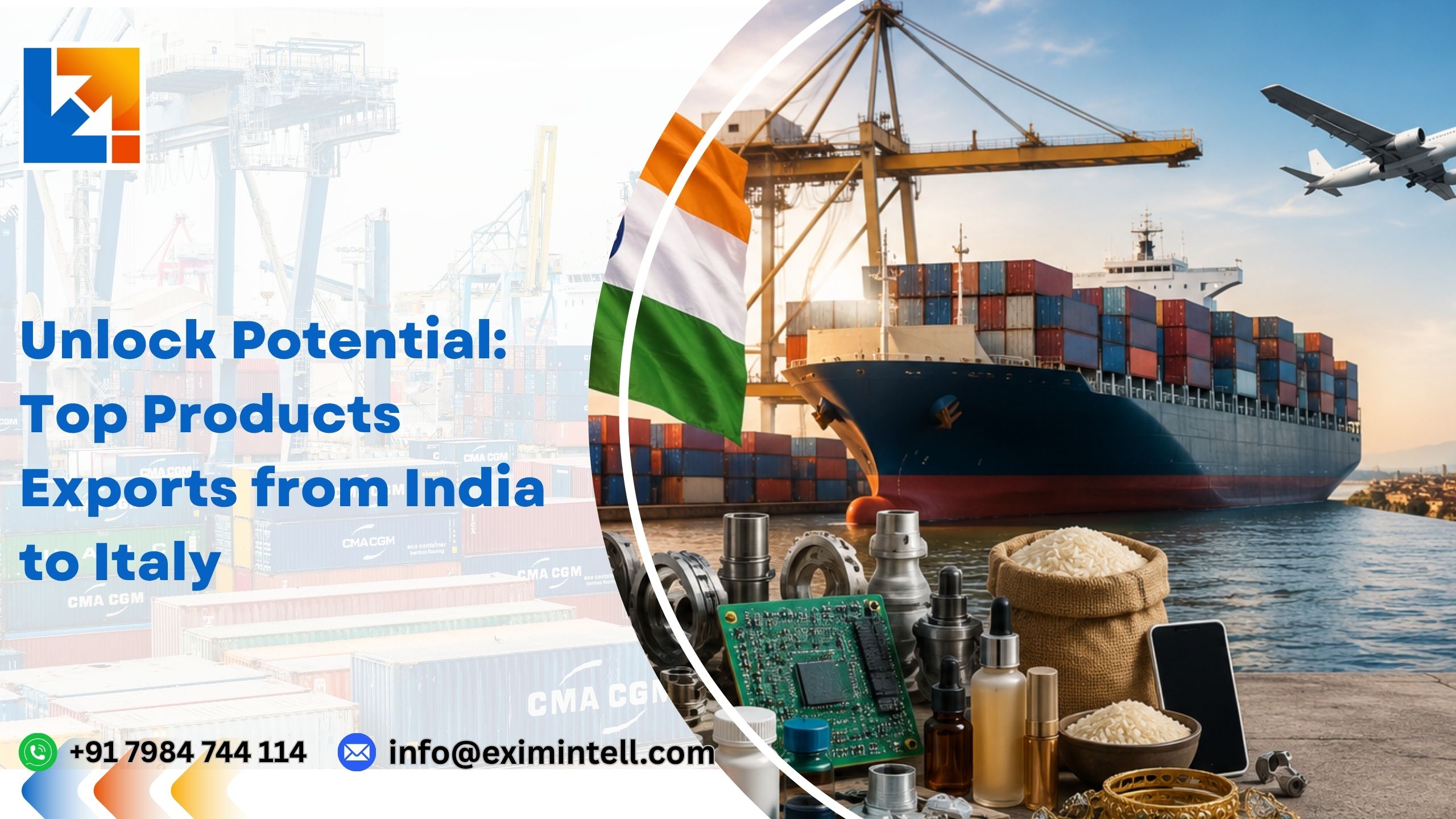
Are you curious about the global trade relationship between India and Italy? Look no further! In this blog post, we will dive into the boundless potential of these two incredible nations as we explore the top products exports from India to Italy.

Get ready to uncover a world of vibrant spices, captivating textiles, and awe-inspiring craftsmanship that has captivated Italians for centuries. So fasten your seatbelts and get ready for an enlightening journey through the rich tapestry of Indian exports that continue to unlock unimaginable opportunities in Italy’s market.

Introduction: Overview Top Products Exports from India to Italy

In recent years, trade between India and Italy has been growing steadily. In 2016-17, bilateral trade reached USD 13.48 billion, an increase of 9.4% from the previous year. India’s exports to Italy stood at USD 6.84 billion, while imports from Italy were worth USD 6.64 billion.

Products such as textiles and clothing, leather goods, footwear, gems and jewelry, processed foods, engineering goods, chemicals, and pharmaceuticals are some of the major products exports from India to Italy. The two countries have also been collaborating in various fields such as defense, science and technology, culture, etc.

Types of Export Products Between India and Italy

Several different types of products can be exports from India to Italy. The following is a list of some of the most popular export products between the two countries:

  1. Spices – Italy is well known for its love of spices, and Indian spices are some of the best in the world. Curries, masalas, and other spice mixes are all popular exports from India to Italy.
  2. Tea – India is one of the largest producers of tea in the world, and Italian consumers are passionate about this beverage. Both loose-leaf and packaged tea are popular exports from India to Italy.
  3. Coffee – As with tea, India is also one of the largest producers of coffee in the world. Arabica and Robusta beans are both popular exports to Italy, where they are used to produce both espresso and filter coffee.
  4. Rice – India is one of the leading producers and exporters of rice in the world, and Italian consumers love this grain. Basmati, jasmine, and other varieties of rice are all popular exports from India to Italy.
  5. Textiles – India is renowned for its textiles, which are made using traditional methods that date back centuries. Handwoven fabrics, embroidery, and block-printed fabrics are all popular exports from India to Italy.

Benefits and Advantages of Exports from India to Italy

There are many reasons to consider exports from India to Italy. The country is a member of the European Union and the Eurozone, making it a stable and lucrative market for Indian goods and services. Italy is also the world’s eighth-largest economy, with a GDP of over $2 trillion.

Indian exports to Italy totaled $13.4 billion in 2018, making it India’s 13th-largest export destination. The top Indian exports to Italy include textiles, clothing, footwear, gems and jewelry, pharmaceuticals, and machinery.

Exporting to Italy offers numerous advantages for Indian businesses. The Italian market is relatively open and easy to access for foreign companies. Additionally, Italian buyers are typically high-quality and discerning, which can help Indian exporters improve the quality of their products and services.

The demand for Indian products in Italy also continues to grow. In 2018, Italian imports from India increased by 9% compared to the previous year. This trend is expected to continue in the coming years as more Italian buyers become aware of the wide range of high-quality goods and services that India has to offer.

Strategies to Increase Your Exports From India to Italy

As India’s economy continues to grow, so does its export industry. India is now the world’s 14th largest exporter, and exports are expected to continue to grow in the coming years. Italy is one of India’s top export destinations, and there are several strategies that Indian companies can use to increase their exports to Italy.

One strategy is to focus on niche markets. Italy is a country with a diverse range of industries, and each sector has its own specific needs. By identifying a niche market and tailoring your products or services to meet the needs of that sector, you can increase your chances of success in the Italian market.

Another strategy is to form partnerships with Italian companies. This can help you gain a foothold in the market and give you access to a larger customer base. It can also help you tap into local knowledge and resources, which can be invaluable when expanding into new markets.

It is important to make sure that your products or services conform to Italian standards and regulations. This may require some investment on your part, but it will pay off in the long run by ensuring that your products are accepted and attractive to Italian buyers.

products export from india to italy engineering items, textiles, medicines, and diamonds, which has a robust and expanding bilateral commercial connection with India. Businesses can more successfully access this growing trade corridor by knowing what does India export to Italy.

Best Practices for Exports from India to Italy

When exporting from India to Italy, it is important to follow best practices to ensure a smooth and successful transaction. Here are some tips to keep in mind:

  1. Be familiar with the Italian market. Research your target market and know your customers’ needs and preferences. This will help you determine which products will be most in-demand and how to price them accordingly.
  2. Work with a reputable export agent. A good export agent can offer valuable insights into the Italian market and help you navigate the exporting process. They can also connect you with reliable suppliers and buyers.
  3. Make sure all your documents are in order. When exporting goods, you will need a commercial invoice, packing list, bill of lading, and other documents. Make sure all these documents are prepared in advance and that all the information is accurate and up-to-date.
  4. Choose the right shipping method. There are several shipping methods available when exporting goods from India to Italy. Selection should be based on factors such as time constraints, budget, and type of goods being shipped.
  5. Insure your shipment. It is important to insure your shipment against loss or damage during transit. This will protect you financially in case of any unforeseen problems.

By following these tips, you can ensure that your exporting experience from India to Italy is as stress-free and successful as possible.

Top products exported from India are engineering goods, textiles, pharmaceuticals, gems and other products making India a preferred country for global sourcing. This variety makes Italian businesses a reliable and cost-effective supply chain partner for italy export products from india.

Conclusion:

In conclusion, the journey of unlocking the potential of top product exports from India to Italy holds great promise for both nations. This trade relationship showcases the synergy between India’s diverse range of products and Italy’s receptive market. By harnessing this potential, both countries can foster economic growth, innovation, and collaboration, while also strengthening their diplomatic ties.

To fully realize the benefits, continued efforts in overcoming challenges and streamlining trade processes will be essential. This partnership serves as a model for leveraging strengths and reaping the rewards of international trade.

Export Between India and Italy, Export Import, Export Import Business, Export Import Business In ahmedabad, Export Import Consultancy in ahmedabad, Export Import Consultant, Export Import Consultant in Ahmedabad, Export Import Course, Export Import Course in ahmedabad, Export Import Training, Export Import Training in ahmedabad, Exporting From India to Italy, Exports From India to Italy, Import Export Consulting Services

FAQ

Q1: What are the top products exported from India to Italy?  India exports engineering goods, textiles, chemicals, pharmaceuticals, gems & jewellery and leather products to Italy.

Q2: Which Indian industry benefits the most from exports to Italy? The biggest winners are the textile and engineering sectors, benefiting from Italy’s strong fashion and manufacturing industries.

Q3: Is India–Italy trade growing, and what drives demand for Indian products?Yes, India’s exports continue to benefit from strengthening EU-India trade ties and Italy’s demand for low-cost raw materials.


Continue Reading →

Welcome to our blog, where we dive deep into the world of agriculture and uncover fascinating trends that shape global markets. Today, we embark on an exciting journey to unravel the remarkable rise of onion export from India. Over the past few years, this humble vegetable has captured international attention with its unique flavor profile and immense versatility in a plethora of cuisines worldwide.

Join us as we peel back the layers and explore how India’s onion export industry is sprouting vigorously, revolutionizing both local economies and dinner tables around the globe. Prepare yourself for a tantalizing exploration that will leave you craving more knowledge about this intriguing trend!

Introduction to Onion Export from India

India is the second-largest producer of onions in the world, with only China producing more. In recent years, there has been a growing trend of onion exports from India. This is due to several factors, including the increasing demand for Indian onions globally and the government’s policies encouraging onion exports.

Onions are an important part of Indian cuisine and are used in many dishes. They are also used as a traditional offering in religious ceremonies. The average Indian consumes around 15 kgs of onions per year. Onions are grown in almost all parts of India, with the major production states being Maharashtra, Karnataka, Andhra Pradesh, and Madhya Pradesh.

Indian onions are in high demand globally due to their superior quality. They are known for their pungent taste and strong aroma. Indian onions are available in a variety of sizes and colors, including white, red, and pink. The most common type of onion exported from India is the red onion.

The export of onions from India has been increasing steadily over the past few years. In the financial year 2018-19, the value of onion exports was Rs 4200 crores (US$610 million), an increase of 26% over the previous year. The top destination for Indian onion exports is Bangladesh, followed by UAE, Nepal, Malaysia, and Sri Lanka.

There are several reasons behind the growing trend of onion exports from India. One reason is the increasing demand for Indian onions globally. India has been able to capture the export market due to its superior quality onions, competitive prices, and excellent packaging. In addition, the government has also implemented various policies and initiatives to encourage onion exports. These include providing financial assistance to farmers for improving production and allowing duty-free import of agricultural products.

Onion exports from India are likely to continue growing in the coming years as global demand increases and the government continues to support farmers. This will ensure a steady supply of high-quality onions for both domestic consumption and export.

The Reasons for the Explosion of Onion Exports from India

The primary reason for the explosion of onion exports from India is the high demand for the commodity in the global market. India is one of the largest producers of onions in the world, and as such, can meet the high demand for onions in the international market. Additionally, Indian onions are typically lower in price than onions from other countries, making them an attractive option for buyers.

Another reason for the growth of onion exports from India is the implementation of effective farming and trading practices by Indian farmers and traders. In recent years, there has been a shift towards more efficient methods of cultivation and storage, which has helped to improve both yield and quality. This, in turn, has made Indian onions even more competitive in the global market.

The Indian government has taken steps to promote onion exports from the country. In particular, it has allotted financial assistance to farmers and traders engaged in onion cultivation and trade. These measures have gone a long way in boosting onion exports from India.

Benefits of Exporting Onions from India

The export of onions from India has been on the rise in recent years. This is due to the growing demand for Indian onions in international markets. The main benefits of exporting onions from India are as follows:

Onion export

1. Onion exports provide a valuable source of foreign exchange for the country.

2. Export of onions helps in boosting the domestic onion industry by providing an additional outlet for their produce.

3. Onion exports also help in generating employment opportunities in the country.

4. Export of onions helps in spreading Indian culture and cuisine to other parts of the world.

5. Onion exports contribute to the overall economy of the country by generating revenue for the government.

The Mechanism of Producing, Process, and Export of Onions in India

India is the world’s second largest producer of onions with an annual production of around 20 million tonnes. The country exports around 1.5 million tonnes of onions every year and is the leading exporter of onions in the world.

Onions are grown in almost all the states of India but the major producing states are Maharashtra, Gujarat, Madhya Pradesh, Karnataka, Andhra Pradesh, and Rajasthan. These six states together account for more than 80% of the total onion production in the country.

The main markets for Indian onion are Bangladesh, UAE, Sri Lanka, Nepal, Malaysia, and Saudi Arabia. Onion export from India has been growing at a steady pace over the past few years and reached Rs 4500 crore in 2018-19. The government has also set a target to double onion exports to 3 million tonnes by 2021-22.

There are several reasons behind the growing trend of onion export from India. Firstly, Indian onions are cheaper as compared to onions produced in other countries due to the lower cost of production. Secondly, Indian onions have a longer shelf life which makes them ideal for export purposes.

Thirdly, India has a large customer base due to its geographical proximity to major onion-importing countries. Fourthly, the quality of Indian onions is very good which has helped build a strong reputation for Indian onions in international markets. Government support through various initiatives like providing subsidies on transportation and storage has also played a key role in promoting onion exports from India.

The process of producing onions in India usually follows a particular pattern. To start with, the farmers prepare their fields by plowing the soil and adding fertilizers. Then they sow the onion seeds into the prepared land either using broadcasting or line sowing according to the variety they are sowing.

The sprinkler irrigation method is preferred for onions as it allows for better extraction of nutrients from the soil. After a month or two, onion seedlings are ready for transplanting into the main field. The weeds are managed with pre-emergence herbicides to avoid their competition with onions for growth and nutrition. Then the onions are harvested manually when they reach full maturity and then separated according to different grades.

After harvesting, onion bulbs need to be cured to improve shelf life and reduce moisture content before packing for export purposes. For curing, onions are spread on mesh cloths in open air allowing sunlight exposure which helps in removing excess water from them through evaporation. Onions are kept spread out on the mesh for a few days until their desired humidity level is achieved before packing them into jute bags. These jute bags filled with cured onions are then loaded onto trucks and shipped to ports for export.

At the ports, onions are unloaded and put through a series of laboratory tests to check for harmful or foreign matter. After necessary tests, the onions are packed into shipping containers along with other necessary paperwork for export purposes before being shipped to their destination countries. Thus, the journey of Indian onions starts from the farmers’ field and ends at the buyer’s store in some distant land.

Challenges Faced by Indian Farmers in the Export of Onions

India is the second-largest producer of onions in the world, accounting for about 15% of global production. However, the country’s share in the international onion trade is very low, at around 2%. This is due to various challenges faced by Indian farmers in exporting onions.

One of the major challenges is the lack of storage facilities for onions. Most Indian farmers do not have access to proper storage facilities, which results in onions getting spoiled quickly. This not only leads to the loss of crops for farmers but also reduces the shelf life of onions, making them unsuitable for export.

Another challenge facing Indian onion farmers is the high cost of transportation. Due to the lack of good infrastructure, transport costs are very high, which makes exporting onions unviable for many farmers.

Indian onion farmers have to contend with volatile prices. Prices of onions can fluctuate wildly due to factors such as weather conditions and crop yields. This makes it very difficult for farmers to plan their production and exports and often leads to them incurring losses.

Key Strategies Adopted by Indian Farmers and Industry Players for Onion Export

There has been a growing trend of onion export from India in recent years. This is due to the increasing demand for onions in the international market, as well as the fact that India is one of the largest producers of onions in the world. To take advantage of this trend, farmers and industry players have adopted various key strategies.

One of the main strategies adopted by farmers has been to increase onion production. This has been done by using high-yielding varieties of onions, as well as adopting better irrigation and fertilization practices. Additionally, farmers have also started storing onions for longer periods, which has helped them meet the rising demand during peak export season.

Industry players have also taken steps to facilitate onion export from India. They have set up packaging facilities that meet international standards, and established relationships with overseas buyers. Additionally, they have also provided financial assistance to farmers to help them expand their onion cultivation activities.

Alternatives to the Onion Export in India

India is the second largest producer of onions in the world, behind only China. Onion export from India has been growing rapidly in recent years, as the country looks to take advantage of its production capabilities. However, not all onions grown in India are suitable for export. Alternatives to the onion export include:

1) Selling onions to domestic markets: This is the most common alternative to exporting onions. Indian farmers typically sell their onions to local wholesalers or retailers, who then sell them to consumers. This is the most profitable option for small-scale farmers, as they do not have to incur the costs associated with exporting their onions (e.g., transportation, packaging, etc.).

2) Selling onions to processing companies: Another alternative to exporting onions is selling them to companies that process them into other products (e.g., powder, flakes, etc.). This option is more viable for large-scale onion growers, as they can negotiate better prices with processing companies.

3) Donating onions to charities: Some farmers donate their excess onion crops to charities that distribute food to needy people. This option helps reduce onion wastage and also provides a social benefit.

Conclusion

In this journey of exploring and understanding the onion export phenomenon, the role of export-import business consultants becomes paramount. Among these, Exim Intell stands out as a trusted partner and expert guide for businesses venturing into the international trade arena. With their extensive industry knowledge, personalized solutions, and commitment to facilitating seamless cross-border transactions, Exim Intell proves to be an invaluable asset to exporters and importers alike.

Continue Reading →

Are you curious about the immense possibilities that lie within the trade industry between India and Qatar? Get ready to embark on an exhilarating journey as we delve deep into the untapped potential of product exports from India to Qatar in 2023. With its thriving economy, strategic location, and growing appetite for quality goods, Qatar presents a golden opportunity for Indian businesses seeking to expand their horizons internationally.

Join us as we unveil the secrets behind this lucrative market and discover how you can seize this moment to establish your brand’s presence in one of the fastest-growing economies in the world.

Introduction – Overview of exports from India to Qatar

India has a long and rich history of trade and commerce, dating back to ancient times. The country’s strategic location at the crossroads of Asia and the Indian Ocean has made it a natural hub for trade and cultural exchange. In modern times, India is one of the world’s leading exporters of merchandise and services.

Qatar is a small country located in the Middle East, on the Arabian Peninsula. Qatar has been a member of the World Trade Organization (WTO) since 1995. The country has a population of 2.6 million people and an economy that is heavily dependent on oil and gas exports. Qatar is also home to a large number of migrant workers from countries like India, Nepal, Pakistan, and Bangladesh.

According to data from the WTO, in 2016, India was the 10th largest exporting country in the world with export shipments totaling USD 265 billion. Qatar was ranked 35th with exports totaling USD 49 billion.

When considering only developing countries, India jumps to 6th place while Qatar remains in 35th place. In 2016, merchandise exports from India accounted for about 2% of global exports while Qatar’s share was just 1%.

The top five export destinations for Indian goods are the United States (USD 42 billion), United Arab Emirates (USD 31 billion), Hong Kong (USD 22 billion), China (USD 16 billion), and the Netherlands (USD 15 billion).

Historical Trends in Exports from India to Qatar

India and Qatar have a long and storied history, dating back centuries. In more recent years, the two countries have enjoyed a strong economic partnership, with India exporting a variety of products to Qatar. Below, we take a look at the historical trends in exports from India to Qatar.

Between 2006 and 2010, Indian exports to Qatar increased rapidly, growing from $1.5 billion to $4.6 billion. This period of growth was driven largely by increases in petroleum product exports, which went from $700 million in 2006 to $3.8 billion in 2010.

After 2010, exports From India to Qatar slowed somewhat, reaching a value of $5.2 billion in 2014. Petroleum products continued to be the dominant export category during this period, accounting for around 70% of all Indian exports to Qatar.

Looking ahead, there is potential for further growth in exports From India to Qatar. The Qatari economy is expected to continue expanding in the coming years, driven by continued investment in the country’s energy sector. This presents an opportunity for Indian companies to increase their sales of petroleum products and other goods and services in Qatar.

Current Market Scenario for Exporting Products from India to Qatar

The market for Indian products in Qatar is very promising. Qatar is a rapidly developing country with a growing economy and a high standard of living. It is also home to a large number of international businesses and organizations. As a result, there is a growing demand for Indian products and services in Qatar.

Indian companies have been quick to capitalize on this opportunity, and there are now many successful businesses exporting products from India to Qatar. The most popular product exports from India to Qatar include food items, clothing, textiles, cosmetics, and electrical goods.

Qatar is an important market for Indian exporters, and the growth potential is significant. With the right strategy and partners in place, Indian companies can be very successful in exporting products to Qatar.

Incentives and Benefits for Exporters

Exports from India to Qatar comes with a range of incentives and benefits that encourage Indian exporters to tap into the Qatari market. The bilateral trade relations between the two nations have led to the implementation of favorable trade agreements and policies that promote seamless export processes.

Exporters can take advantage of reduced tariffs or even duty exemptions under these agreements, making their products more competitive in the Qatari market. Additionally, streamlined customs procedures and simplified documentation further expedite the export process, saving time and resources for businesses.

Indian exporters can take advantage of various incentives and benefits when exporting to Qatar. These include:

1) Duty-free imports into Qatar: Indian exports to Qatar are entitled to duty-free treatment under the India-Qatar Free Trade Agreement (FTA). This helps to lower the cost of Indian products in the Qatari market, making them more competitive.

2) Market access opportunities: The FTA provides preferential market access for Indian goods and services in Qatar. This gives Indian businesses a greater chance to penetrate the Qatari market and increase their exports.

3) Economic cooperation between India and Qatar: India and Qatar have strong economic ties, with bilateral trade totaling over US$17 billion in 2016-17. This creates a favorable environment for Indian exports to Qatar, as there is already a strong demand for Indian products in the country.

Global Business Opportunities from Indian Product Exports to Qatar

India is blessed with a diverse range of natural resources, which has given rise to a wide variety of product exports. Qatar is a small but wealthy country located in the Middle East, with a population of 2.6 million people. It has a strong economy, driven by the oil and gas industry, and is supported by substantial foreign reserves. Qatar is also home to several large businesses and multinational corporations.

There is significant potential for product exports From India to Qatar. Qatar offers opportunities for growth in many sectors, including energy, construction, healthcare, hospitality and tourism, education, retail, information technology, and telecommunications. India has a comparative advantage in many of these areas due to its vast pool of skilled workers and low-cost base.

In recent years, Qatar has been investing heavily in infrastructure development in preparation for the 2022 FIFA World Cup. This provides a unique opportunity for Indian companies to supply products and services to support this major event.

There is also growing demand from Qatari businesses for Indian products and services as they look to diversify their supplier base beyond traditional markets such as Europe and the United States.

Qatar presents an attractive market for Indian product exports due to its high-income levels, young population, and limited domestic manufacturing capacity. There are strong prospects for growth in many sectors where India has a competitive advantage. By exporting products to Qatar, Indian companies can access new markets and generate significant revenue growth.

Potential Export Products From India to Qatar 2023

Exports from India to Qatar

Exports from India to Qatar has been a key facet of their bilateral economic relations, fostering trade and strengthening ties between the two nations. In 2023, several potential export products have emerged as lucrative opportunities for Indian businesses to tap into the Qatari market.

The information technology sector presents another promising avenue for exports from India to Qatar. Qatar’s focus on digitization and its growing IT infrastructure offer Indian IT services and software companies a chance to expand their horizons. Services like software development, IT consulting, and e-commerce solutions are in high demand.

As Qatar strives to become a knowledge-based economy, Indian companies have an opportunity to share their expertise and technological prowess, fostering mutual growth. In 2023, the export landscape from India to Qatar is vibrant and varied, encompassing petroleum products, agricultural goods, and IT services, all of which hold substantial potential for a mutually beneficial trade relationship.

There are many potential exports from India to Qatar in 2023. Here are a few examples:

1. Refined petroleum products: Qatar is the world’s largest exporter of refined petroleum products, and India is a major importer. In 2023, India is expected to increase its imports of refined petroleum products from Qatar, as its economy continues to grow.

2. Aluminium: Qatar produces large quantities of aluminum, and India is a major market for this metal. In 2023, India is likely to increase its imports of aluminum from Qatar.

3. Steel: Qatar has become a major producer of steel, and India is one of the world’s largest consumers of this metal. In 2023, India is expected to import more steel from Qatar.

4. Fertilizers: Qatar is a major producer of fertilizers, and India is one of the world’s largest markets for these products. In 2023, India is likely to import more fertilizers from Qatar.

5. Chemicals: Qatar produces a wide variety of chemicals, and India is one of the world’s largest markets for these products. In 2023, India is expected to import more chemicals from Qatar.

Challenges in Increasing Export Trade between India and Qatar

The current trade relations between India and Qatar are not as strong as they could be. Many challenges need to be addressed to increase export trade between the two countries.

One of the main challenges is the high tariffs that Qatar imposes on imported goods. These tariffs make it difficult for Indian companies to compete in the Qatar market. Another challenge is the lack of awareness of Indian products in Qatar. This makes it difficult for Indian companies to promote their products in Qatar.

There are also logistical challenges in exporting to Qatar. The distance between the two countries makes it difficult to transport goods quickly and efficiently. Additionally, there are few direct flights between the two countries, which makes travel difficult and expensive.

Despite these challenges, there is potential for increased export trade between India and Qatar. The two countries have a long history of trade and cultural exchange. Additionally, India has a large population of expatriates living in Qatar, which creates a demand for Indian products.

Conclusion

As we reflect on the journey of product exports from India to Qatar in 2023, Exim Intell’s role becomes a beacon of success, a testament to the power of collaboration, and a testament to the potential of well-executed export-import consultancy services. In this era of globalization, such partnerships will continue to be the cornerstone of thriving international trade, and Exim Intell stands at the forefront, empowering businesses to transcend boundaries and achieve new heights of success.


Continue Reading →

Are you tired of the same old 9-5 routine? Do you dream of exploring exciting opportunities that offer endless profit potential? Look no further! In today’s blog post, we are diving headfirst into the world of the import-export industry, uncovering hidden gems and lucrative income streams.

Whether you’re a seasoned entrepreneur or just starting, get ready to be captivated by the countless possibilities awaiting you in this dynamic sector. Brace yourself for an adventure where borders are merely lines on a map and success knows no bounds – it’s time to discover your next big break in import-export land!

Introduction to the Import-Export Industry

The import-export industry offers a world of opportunity for those looking to generate income outside of the traditional 9-5. From sourcing and selling products internationally to facilitating the transport of goods, there are several ways to get involved in the import-export industry.

For those just getting started, it’s important to understand the basics of how the industry works. In general, importing refers to the act of bringing goods or services into a country from another country. Export, on the other hand, is the process of sending goods or services out of a country to another country.

Several factors come into play when importing or exporting goods, such as tariffs, quotas, and duties. It’s important to have a solid understanding of these before getting started in the import-export business. Additionally, it’s also beneficial to have an understanding of international shipping logistics and customs regulations.

Those looking to get started in the import-export industry can find plenty of opportunities for making money. With a little research and planning, anyone can tap into this lucrative market and start generating income.

Types of Opportunities in the Import-Export Industry

The import-export industry offers a variety of opportunities for those looking to start their own business or expand their existing operation. Below are some of the most common types of opportunities in the industry:

Import- Export Industry

1. Export Agent/Broker: An export agent or broker is someone who facilitates the sale of goods from one country to another. They typically work with manufacturers and suppliers in the country of origin to help them find buyers in other countries.

2. Import/Export Merchant: An import/export merchant is a company that buys goods from suppliers in one country and sells them to customers in another country. Merchants typically specialize in a certain type of product or commodity, such as food products, textiles, or electronics.

3. Freight Forwarder: A freight forwarder is a company that specializes in arranging transportation for goods being shipped between two countries. Forwarders typically provide a variety of services, such as storage, packaging, and documentation preparation.

4. Customs Broker: A customs broker is someone who helps businesses comply with customs regulations when importing or exporting goods. Brokers can provide a variety of services, such as consulting on regulations, preparing paperwork, and filing protests on behalf of clients.

Pros & Cons of Starting an Import-Export Business

There are many pros and cons to starting an import-export business. on the plus side, an import-export business can be very profitable. There is a large potential market for imported goods, and if you can tap into it, you can make a good living. Additionally, an import-export business can be relatively easy to start up – you don’t need a lot of capital or experience to get started.

However, there are also some downsides to starting an import-export business. One of the biggest challenges is finding reliable suppliers. It can be difficult to find manufacturers who produce high-quality goods at competitive prices.

Additionally, shipping costs can be quite high, and there is always the risk of damage or loss during transit. Import/export businesses are heavily regulated by both government agencies and international treaties, so you need to be familiar with the rules and regulations before getting started.

How to Start an Import-Export Business

Starting an import-export business can be a lucrative way to earn income, as there is a global market for goods and services. To start an import-export business, you will need to research the market, find a niche, and develop a business plan.

1. Research the Market

Before starting your import-export business, you need to research the market to find out what goods or services are in demand. You can use online resources, such as trade directories and market reports, to learn about trends in the global marketplace. You should also consider contacting trade associations or attending trade shows to get more information.

2. Find a Niche

Once you have an idea of what goods or services are in demand, you need to find a niche for your business. Try to identify a specific need that you can meet with your product or service. For example, you might specialize in importing organic food products from South America or exporting fashion accessories to Asia.

3. Develop a Business Plan

After you have researched the market and found a niche for your business, you need to develop a business plan. Your business plan should include an analysis of the competition, marketing strategies, financial projections, and operational plans. Once you have developed your business plan, you will be ready to start your import-export business!

4. Obtain Financing

Starting an import-export business requires capital, so you will need to find financing. Whether you use your savings, obtain a loan, or pursue venture capital funding, make sure you can cover the costs of startup and operation.

5. Register Your Business

You also need to register your business with relevant government agencies before you can get started. Depending on where you’re located, this could include registering with your local Chamber of Commerce, obtaining tax IDs from the IRS and state governments, and obtaining any necessary import/export permits or licenses.

6. Establish Supplier Relationships

Once your business is registered, it’s time to establish relationships with suppliers. You should research potential suppliers, evaluate products and pricing structures, negotiate contracts, and choose the right partners for long-term success.

7. Market Your Business

Lastly, you need to market your business to get customers and make sales. Consider using online marketing techniques such as SEO and social media marketing as well as traditional methods like print advertisements and cold-calling prospects.

Market Research & Sourcing Products for Your Business

Product sourcing is a key part of any successful import-export business. without the right products, you won’t be able to compete in the market. There are a few different ways to go about sourcing products for your business.

One way is to do your market research. This involves taking the time to understand your target market and what they are looking for. Once you have a good understanding of your market, you can start sourcing products that you think they will be interested in. This can be a bit of a trial-and-error process, but it will eventually lead you to the right products.

Another way to source products is to use a sourcing agent. These agents specialize in finding products for businesses and can help you save a lot of time and effort in your product search. They usually have access to a wide range of suppliers and can help you negotiate better prices for your products.

Sourcing agents typically charge a commission for their services, but they can be well worth the investment if they help you find the right products for your business.

No matter which method you choose, make sure that you take the time to find the right products for your business. The wrong products can quickly sink your business, so it’s important to get it right from the start!

Shipping & Logistical Concerns in the Import Export Trade

Most businesses that engage in the import-export trade are concerned with two main things: shipping their goods to their overseas customers, and making sure they are getting paid for their efforts. Let’s take a look at each of these logistical concerns in turn.

Shipping can be a challenge when working with overseas customers. First, you need to find a reputable and reliable shipping company that can get your goods to their destination safely and on time. This can be a difficult and costly process, especially if you are shipping large or delicate items.

In addition, you need to make sure that your shipping paperwork is in order, as this can often be a source of delays and frustration. Once your goods have been shipped, you also need to keep track of them so that you can provide your customer with an estimated delivery date. All of this takes time, effort, and money – but it is essential if you want to succeed in the import-export trade.

Making sure you get paid is another important concern when doing business overseas. There are several ways to do this, but the most common is through using a third-party payment service such as PayPal or Western Union.

These services allow you to receive payments from your customers without having to worry about exchange rates or bank transfer fees. You will still need to provide invoices and other documentation to your customer, but using a third-party payment service can simplify the process and help ensure that you get paid promptly.

Distribution Channels and Negotiating Tactics

There are several distribution channels available to companies in the import-export industry. These include:

1. Direct selling: This involves selling products directly to customers, either through face-to-face interactions or online.

2. Indirect selling: This involves selling products through intermediaries such as wholesalers, retailers, or online marketplaces.

3. Franchise: This involves licensing the rights to sell a company’s products or services to franchisees, who then operate their independent businesses.

4. Joint venture: This involves partnering with another company to jointly develop and market products or services.

5. Licensing: This involves granting another company the right to use your company’s intellectual property, such as patents, trademarks, or copyrights.

The most appropriate distribution channel for a particular company will depend on a variety of factors, including the type of product being sold, the target market, and the resources available. It is important to carefully consider these factors before deciding on a distribution channel.

Once a distribution channel has been selected, it is important to negotiate terms with potential partners that are favorable to your company. This includes negotiating contracts that protect your intellectual property and ensuring that you receive an adequate share of profits.

Risk Management Strategies for Your Business

Risk management is critical for any business, but it is especially important in the import-export industry. This industry is full of potential pitfalls and risks that can jeopardize your business if you’re not careful.

There are a few key risk management strategies you should implement in your import-export business:

1. Diversify your products and markets: Don’t put all your eggs in one basket. Spread out your products and markets so that you’re not too reliant on any one area. This will insulate your business from market fluctuations and disruptions.

2. Manage currency risk: Currency fluctuations can wreak havoc on your bottom line. Use hedging strategies to protect yourself from currency swings.

3. Mitigate political risk: Political instability in countries can disrupt trade and lead to losses for businesses. Stay up-to-date on the political situation in the countries you’re doing business with and be prepared to adjust your plans accordingly.

4. Get insurance: Insurance is a must in the import-export industry. Make sure you’re adequately covered against losses due to theft, damage, or other unforeseen events.

Networking Tips & Finding Partners

There are a few simple tips that can help you network and build relationships in the import-export industry. First, attend trade shows and events that are relevant to your business. This is a great way to meet potential partners, customers, and suppliers.

Second, join trade associations or chambers of commerce related to your industry. These organizations can provide valuable networking opportunities and resources. Consider working with a broker or freight forwarder. These professionals can help you connect with the right people in the industry and navigate the complex world of international trade.

Conclusion

One crucial aspect of succeeding in the import-export industry is seeking professional guidance from seasoned experts like EximIntell. As a leading export-import consultant, EximIntell offers invaluable insights, knowledge, and experience that can make a significant difference in your journey towards success. Their expertise in international trade, customs regulations, market research, and logistics can help you overcome challenges and capitalize on growth opportunities.

Continue Reading →

Welcome to our blog, where we dive into the fascinating world of international trade and explore the symbiotic relationship between two diverse nations. In this article, we set our sights on India’s exports to Portugal in 2023—an intricate tapestry of commerce that blends ancient traditions with modern innovation.

Join us as we unveil the compelling significance behind these bustling trade routes and discover how they pave the way for a promising future filled with prosperity and cultural exchange. Get ready to embark on a mesmerizing journey through time and continents, unraveling the untold stories woven within the fabric of economic collaboration between India and Portugal!

Introduction: The Significance of India’s Exports to Portugal in 2023

In recent years, India’s exports to Portugal have increased significantly. In 2010, India’s exports to Portugal amounted to $1.6 billion, representing a significant increase from the previous year. In 2013, India’s exports to Portugal reached $2.4 billion, an increase of 46 percent from the previous year.

The following year, India’s exports to Portugal increased by 9 percent to $2.6 billion. In 2015, India’s exports to Portugal again increased by 9 percent to $2.8 billion. 2016 was a record year for India’s exports to Portugal, with a total value of $3.1 billion exported from India to Portugal. This represented an increase of 11 percent from the previous year.

The data clearly shows that there has been a consistent and steady increase in the value of Indian exports to Portugal over the past few years. This trend is expected to continue in the future as well. There are several reasons for this trend. First, the Indian economy has been growing rapidly in recent years, and this growth is expected to continue.

This economic growth has led to an increase in demand for Indian products and services abroad, including in Portugal. Secondly, the Indian government has been working hard to improve the country’s export infrastructure and promote exports through various initiatives such as Make in India and the Export-Import Bank of India (Exim Bank). These efforts are bearing fruit and helping to boost Indian exports.”

Economic Benefits of Exporting from India to Portugal

India’s exports to Portugal have been growing steadily over the past few years. In 2016, India’s exports to Portugal amounted to US$ 1.13 billion, up from US$ 956 million in 2015. This growth is significant as it represents a 17% increase in exports from India to Portugal.

The main economic benefits of exporting from India to Portugal include:

1. Increased export earnings for India: Exports from India to Portugal have increased Indian export earnings by US$ 177 million in 2016. This is a significant increase that will contribute to the overall growth of the Indian economy.

India's Exports to Portugal


2. Trade balance improvement for India: The growth in exports from India to Portugal has helped improve India’s trade balance with Portugal. In 2016, the trade balance between the two countries was in favor of Portugal by US$ 779 million. However, this was an improvement from the 2015 trade balance which was in favor of Portugal by US$ 931 million.

3. Job creation in India: The increased exports from India to Portugal have generated new jobs in India, specifically in the export sector. This is beneficial for both the Indian economy and for employment levels within the country.

4. Wider market access for Indian products: By exporting to Portugal, Indian companies have access to a wider market for their products. This provides them with new opportunities to grow their businesses and increase their revenue.

5. Improved relations between India and Portugal: The increased economic ties between India and Portugal have improved bilateral relations between the two countries. This is beneficial for both sides, as it allows them to engage in more constructive dialogue and explore new areas of cooperation.

Trade Agreements of India’s Exports to Portugal in 2023

India and Portugal have a strong economic relationship, with bilateral trade totaling $5.51 billion in 2016. India is Portugal’s 9th largest trading partner, and Portugal is India’s 35th largest.

During Portuguese Prime Minister Antonio Costa’s visit to India in January 2017, the two countries signed four MoUs/Agreements to enhance cooperation in areas such as tourism, science and technology, start-ups, culture, and information technology.

The first Agreement was on cooperation in the field of tourism. Under this Agreement, the two countries will work together to develop institutional mechanisms for cooperation in the area of tourism promotion and marketing. They will also jointly organize workshops and seminars to promote mutual understanding and awareness of each other’s tourist destinations and products.

The second Agreement was on Information Technology and start-ups. This Cooperation Agreement seeks to establish a framework for collaboration between Indian and Portuguese entities in the area of information technology, including start-ups. The agreement will help create an enabling environment for innovation and entrepreneurship in both countries.

The third Agreement was on Scientific and Technological Cooperation. This MoU aims to establish a framework for long-term scientific and technological cooperation between India and Portugal. The agreement will help create an environment that encourages the exchange of scientific and technological personnel, information, and knowledge between the two countries.

The fourth Agreement was on Cultural Cooperation which seeks to promote greater understanding and appreciation of each other’s culture through the exchange of cultural troupes, artisans, films

Export Sectors from India that Benefit the Portuguese Economy

In 2019, Portugal was India’s 30th largest trading partner with bilateral trade totaling $5.53 billion. India’s exports to Portugal include textiles, footwear, precious stones and metals, organic chemicals, and inorganic chemicals. These products benefit the Portuguese economy by providing inputs for Portuguese industries, creating jobs, and generating tax revenue.

Textiles are one of the largest export sectors from India to Portugal. In 2019, textile exports from India to Portugal totaled $1.47 billion, making up 26% of India’s total exports to Portugal. Portugal is a leading producer of garment and textile machinery, and Indian textile exports help to meet the demand for these inputs. In addition, the textile industry is an important source of employment in Portugal, with over 80 thousand people employed in the sector.

Footwear is another major export sector from India to Portugal. In 2019, footwear exports from India to Portugal totaled $438 million, making up 8% of India’s total exports to Portugal. Portugal has a strong footwear manufacturing industry which employs over 12 thousand people. Indian exports of footwear provide inputs for this industry and help support jobs in Portugal.

Precious stones and metals are another export sector from India that benefits the Portuguese economy. In 2019, exports of these products from India to Portugal totaled $399 million, making up 7% of India’s total exports to Portugal. The Portuguese jewelry industry is a significant contributor to the country’s economy, with Jewelry accounting for 2% of total exports in 2019. Indian exports of precious stones and metals help to meet the demand for these inputs and support jobs in Portugal’s jewelry sector.

In addition to these sectors, other export sectors from India benefit the Portuguese economy, including organic chemicals ($345 million), inorganic chemicals ($229 million), pharmaceuticals ($77 million), and nuclear reactors and machinery ($68 million).

Projected Export Figures for India – Portugal Trade in 2023

India’s exports to Portugal are expected to reach $5.4 billion by 2023, up from $2.9 billion in 2018. This growth is driven by the increasing demand for Indian products and services in Portugal, as well as the expanding economic ties between the two countries.

India’s export growth to Portugal has been spurred by the country’s strong economic performance in recent years. Portugal’s GDP growth is expected to reach 2.4% in 2019, up from 1.9% in 2018, according to the International Monetary Fund (IMF). This economic expansion has led to increases in Portuguese imports, including from India.

The growing trade between India and Portugal is reflective of the expanding economic ties between the two countries. In 2016, India and Portugal signed a bilateral Investment Protection Agreement (BIPA), which provides a framework for promoting and protecting investment between the two countries. The agreement is seen as a key step in furthering economic cooperation between India and Portugal.

In addition to increased trade, cooperation between India and Portugal has also been expanding in other areas. In October 2018, the two countries launched a joint naval exercise called ‘IN-POR FORMIDABLE EXERCISE’, aimed at enhancing maritime security cooperation between them. The exercise was held off Goa, on India’s west coast, and was attended by ships from both countries’ navies.

The growing economic ties between India and Portugal are indicative of the potential for further expansion in their trade relationship.

Impact of Indian Exports on Portuguese Industries

The impact of Indian exports on Portuguese industries is significant. Portugal is a small country with a limited manufacturing base. As a result, its industries are highly dependent on imported goods and materials. India is one of Portugal’s largest trading partners and its largest supplier of imported goods.

In recent years, Indian exports to Portugal have increased significantly. This has helped to offset the decline in exports from other traditional partners such as Brazil and China. Indian exports to Portugal now account for around 10% of all Portuguese imports.

The increase in Indian exports has been driven by the growing demand for Portuguese products in India. Portuguese companies have been able to benefit from the growing Indian middle class and their desire for high-quality Western products. In particular, there has been strong demand for Portuguese wine, food, and fashion brands.

The growth in Indian exports has also been supported by government initiatives. The Indian government has been working to improve trade relations with Portugal through measures such as streamlining customs procedures and increasing investment in infrastructure. These efforts have made it easier for Indian companies to do business in Portugal and have helped to boost trade between the two countries.

Opportunities to Improve Future Exports

As the Portuguese economy continues to grow, there are opportunities for India to increase its exports to Portugal. Currently, India exports a variety of goods to Portugal, including textiles, clothing, and footwear. However, there is potential for India to export a wider range of goods, including electronics and engineering products.

To take advantage of these opportunities, Indian businesses need to be aware of the Portuguese market and the preferences of Portuguese consumers. They should also invest in marketing and promotion activities to raise awareness of their products in Portugal. Additionally, it is important to develop strong relationships with Portuguese importers and distributors.

By taking advantage of these opportunities, India can significantly increase its exports to Portugal and contribute to the continued growth of the Portuguese economy.

Conclusion

In conclusion, the significance of India’s exports to Portugal in 2023 is amplified by the pivotal role played by Exim Intell as an Export Import Business Consultant. Together, they form a powerful synergy that drives economic growth, strengthens bilateral ties, and paves the way for a prosperous future between India and Portugal. As the world becomes increasingly interconnected, the value of such collaborative efforts cannot be overstated, making Exim Intell an essential catalyst for success in the global trade landscape.


Continue Reading →