

What Is a Shipping Bill?
If you work in international trade, then knowing what is a shipping bill, is crucial. Whether you are a beginner in exporting, or an old hand, this document is crucial for every export transaction in India. what is a shipping bill? It is a legal document that an exporter, or an exporters customer broker, or india shipping attorney, submits to the Indian Customs before the shipment can leave the country. No shipping documents are contraband in India.
Understanding what is a shipping bill, helps exporters to confidently and accurately control the export cycle. The Shipping bill meaning is the formal statement an exporter submits to customs, detailing the goods to be exported, their quantity, monetary value, country of destination, and duties, if any, are payable, or if any are to be exempted. The shipping bill meaning is also more than just a statement. It is a document that is an integral piece to ensuring your export cargo is cleared with the customs, and that you can claim a duty drawback and a GST refund.
What Is a Shipping Bill in Export?
The shipping bill is a document that verifies the entire export procedure. What is a shipping bill in simple terminology? It is your legal authorization document from the Indian Customs Department to clear goods across the frontier. No Let Export Order (LEO) is issued what is a shipping bill, and your cargo cannot be given to the transporter. Every genuine exporter should clearly understand what is a shipping bill is, before embarking on their first export consignment. Mistakes on the shipping bill have serious consequences, such as regulated delays and denial of refund claims.
What is shipping bill in export includes defining and clarifying the most critical aspects for your consignment. Every exporter should understand what is shipping bill in export because mistakes will cost lots of time trying to sort out the shipping and mistakes will also affect your claims for refunds. Here is what this document controls for every export:
- It controls the answer to and the question of whether one is entitled to a drawback of duties or a refund of the IGST from the Indian Customs authorities.
- It provides a capture of the correct HS Code classification of the exported goods for the purpose of tariffs and compliance.
- It provides a record of the FOB value of the shipment for the purpose of statistical reporting as well as the calculation of the duties.
- It provides a mention of the port of loading and port of destination as well as the shipping line’s name that will handle the cargo.
- It offers a linkage of the IEC number and GSTIN to the shipment for the purpose of processing post-export benefits.
Categories of shipping bills
There are a number of types of shipping bills based on the nature of the export and the duty benefits claimed. Familiarity with these types of shipping bills pick the right one and avoid rejection at the customs. The right choice can avoid duty refund delays or disputes at the custom. Always consult your customs agent prior to filing.For more details on essential export documents like the Certificate of Origin.
Five main types include the Dutiable Shipping Bill, used when export duty applies; the Duty-Free Shipping Bill, submitted when there is no export duty; the Drawback Shipping Bill, submitted to claim duty drawback; the DEPB Shipping Bill, used in the Duty Entitlement Passbook Scheme; and the Ex-Bond Shipping Bill, submitted when goods are exported from a bonded warehouse. Each type serves a specific purpose and is required to be chosen based on your export category and eligibility.
Shipping Bill Format
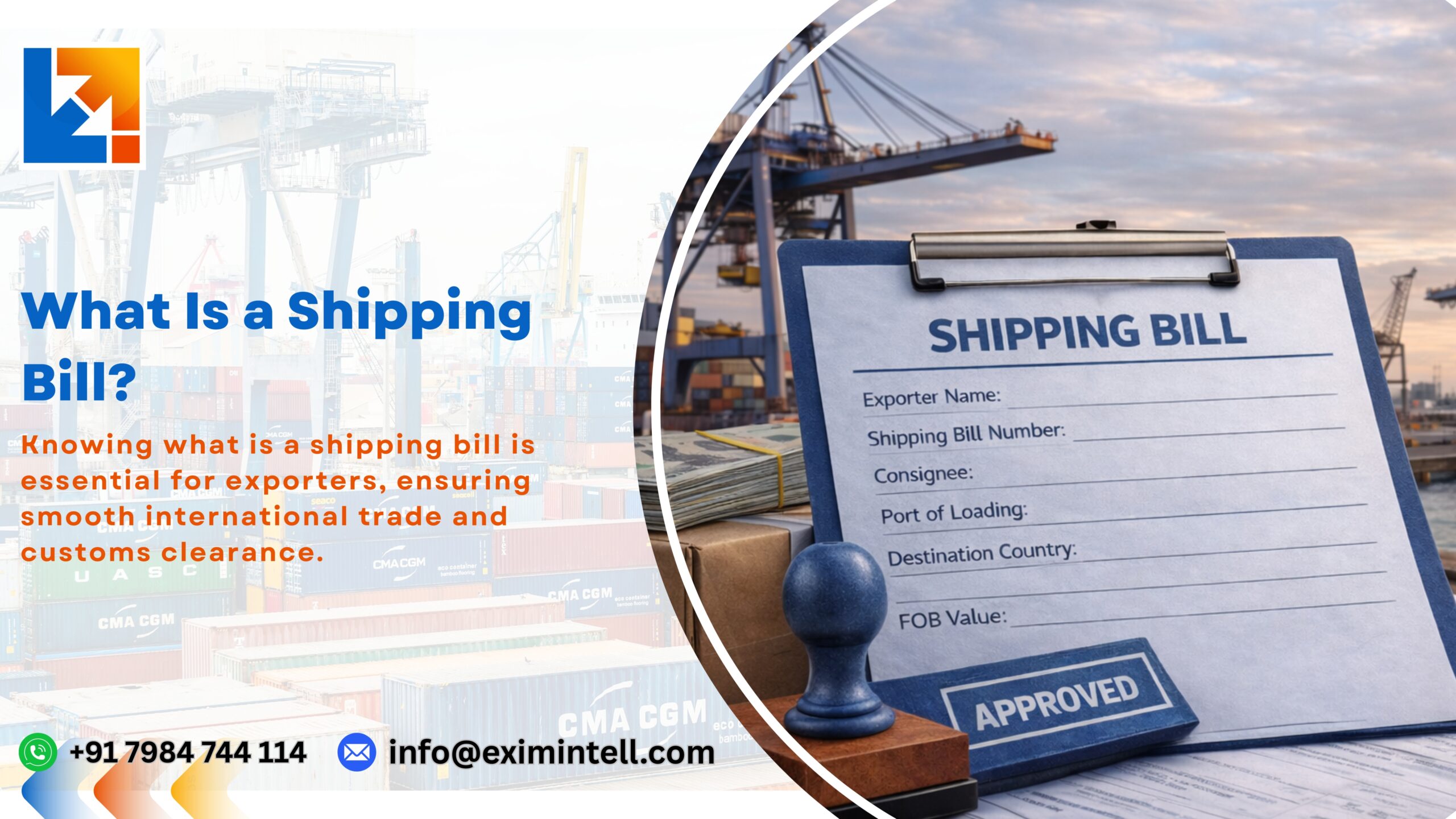
The shipping bill format, as standardized in the Indian Customs ICEGATE system, is to be filed digitally before the shipments leave from the port. The shipping bill format captures all relevant information and each exporter is required to do the following before submission:
- The name of the exporter, IEC number, and GSTIN must match with the ICEGATE portal.
- Name of Consignee, country of destination, and complete address for the shipment must match with export invoice
- To avoid customs interrogation / penalty, HS Code and FOB value of the goods must be mentioned.
- Port of loading, name of the shipping line and Vessel are to be updated at the time of filing the bill.
- To expedite post export benefits, the Duty Drawback Code or claims of IGST refunds should be clearly mentioned.
The shipping bill format has, to a large extent, been digitized under SWIFT in India, thus expediting and increasing transparency with respect to exporters. The filing of shipping bills requires a declaration and a digital signature of the exporter or his/her authorized Customs House Agent. Any mismatch of the particulars may lead to Customs queries or delays in the issuance of the Let Export Order.
Shipping Bill Number and Shipping Bill Enquiry
After your documents have been filed and processed, customs assigns your consignment a distinct shipping bill number. This shipping bill number will be your most important reference for communication concerning that shipment, including GST refund claim communications, duty drawback application communications, and communications with your freight forwarder or shipping line. Your shipping bill number will be required for communications during the post-export compliance process, so keep it for your records. For a deeper look at the Import-Export Industry and how you can tap into the opportunities it provides.
A shipping bill enquiry provides exporters with the ability to check the status of their documents in real time on the ICEGATE portal. Using shipping bill enquiry on ICEGATE, you can do the following:
- Confirm whether or not your shipping bill has been filed and accepted by Indian Customs
- Find out if a Let Export Order has been issued for your shipment at the port
- Determine if there are any auxiliary queries or examination orders issued by the customs officer
- Identify the current status of your export clearance, from filing to the issuance of the final LEO
- Check whether there are any pending duties to be refunded or tied to the shipping bill number
Performing regular shipping bill enquiry will help you stay updated on the status of your shipment and will help to prevent customs compliance issues and port delays.
Frequently Asked Questions
Q1. What is a shipping bill and who files it?
A shipping bill is a required customs document for exporting goods from India, and it is filed by the exporter or their authorized Customs House Agent via the ICEGATE portal before the shipment leaves.
Q2. What types of shipping bills are there?
The types of shipping bills include dutiable, duty free, drawback, DEPB, and ex-bond. These are differentiated based on the nature of the exports and the duty benefits.
Q3. How do I enquire about shipping bills online?
To know the status of your shipping bill, go to ICEGATE’s official website. There, you will see a shipping bill status tracker, where you will enter your shipping bill number, shipping bill date, and the port of export.
Conclusion
Shipping what is a shipping bill compliance and clear documentation, and are the first step in facilitating profitable exports from India. Submitting an accurate shipping bill format, tracking your consignment through the shipping bill enquiry, and keeping your documents clear and accurate, all ensures you stay on the right side of the law. These will help you to maximize your exports and receive any drawback, GST refunds and your LEO on time. The answer to the question, what is a shipping bill will shape your exports. If you want guidance with documentation, sourcing, or shipping procedures, you can always Contact Us to get expert assistance before starting your export journey.
0 Comment
Continue Reading →
