

If you’re new to export documentation, one of the first terms you’ll come across is the proforma invoice. Before goods are packed, before payment terms are locked, and before a buyer confirms an order, this is usually what kicks things off. For Indian exporters working with overseas buyers, getting this document right can save you delays, payment disputes, and confused customs officials down the line. This guide walks through what it actually is, how to lay one out correctly, and where exporters commonly slip up.
It usually gets issued once the buyer and seller have agreed on the basic terms of a deal but before the goods actually ship. It gives the buyer a clear picture of what they’re ordering, what it will cost, and under what conditions — so there are no surprises once the real invoice arrives. It’s also just one piece of a larger paper trail; if you want to see where it fits alongside other documents like the packing list or certificate of origin, our Import Export Document Checklist lays out the full set exporters typically need to keep ready.
What is proforma invoice ?
At its core, the proforma invoice meaning is simple: it’s a preliminary bill that a seller sends to a buyer before the actual sale is finalized. It isn’t a demand for payment, and it isn’t a legal invoice in the accounting sense. Think of it as a detailed quotation that also acts as a formal commitment on paper.
Common Uses
Exporters and importers rely on this document for a handful of practical reasons, not just as routine paperwork:
- It’s the document banks ask for before opening a Letter of Credit
- Buyers often need it to apply for import licenses back home
- It helps a buyer line up advance payment or financing with their bank
- Customs sometimes wants it as a reference during pre-shipment checks
- It locks in pricing, quantity, and delivery terms before you even start production
This raises a fair question: what’s proforma invoice actually for, beyond being a formality? It removes ambiguity before any money or goods move — both sides know exactly what they’ve agreed to before anything is committed.
Why the Proforma Invoice Meaning Matters for Indian Exporters
For exporters based in India, getting this right isn’t just academic — it directly affects how smoothly a deal moves forward. Plenty of first-time exporters lose valuable time simply because their document is incomplete or doesn’t match what the buyer’s bank expects.
This gets especially important when payment runs through a Letter of Credit. Banks won’t open an LC unless the document matches the buyer’s purchase order exactly — same quantities, same pricing, same terms. Our detailed guide on Letter of Credit in Export covers exactly how this ties into the LC process, worth a read alongside this one if you’re dealing with LC-based payments.
What a proforma invoice format Should Include
There’s no single universal layout required by law for this document, but international trade practice has settled into a fairly standard structure. Miss even one field and you risk holding up an LC application or confusing customs on the buyer’s end.
Formatting a Proforma Invoice in Excel
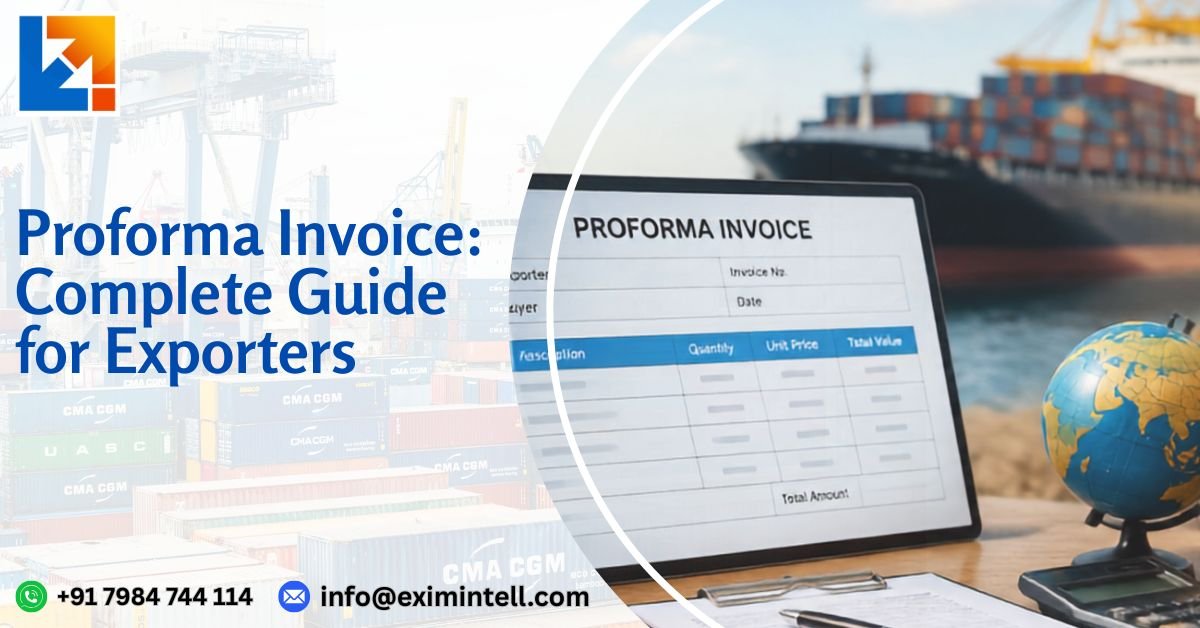
Most exporters build their proforma invoice format in excel simply because it’s flexible, quick to edit order by order, and doesn’t need any specialized software. A basic template should have:
- Invoice number and date of issue
- Product description along with the HS code
- Quantity, unit price, and total value
- Currency and agreed payment terms
- Incoterms — FOB, CIF, EXW, whichever applies — plus expected delivery date
- How long the offer stays valid
Keeping it in Excel also makes life easier for repeat buyers — you just duplicate the sheet and update the pricing and product lines.
A Few Fields Worth Extra Care
HS Code — Not optional. Buyers rely on it for customs classification, and getting it wrong can trigger delays or wrong duty calculations on their end.
Incoterms — Spell out exactly who’s responsible for shipping, insurance, and clearance at each stage. Vague terms cause arguments later.
Validity Period — Prices shift. Stating a clear window protects you from being stuck honoring old pricing if the buyer takes weeks to confirm.
Proforma Invoice vs Tax Invoice
New exporters mix these up constantly, so it’s worth being blunt about the difference. One is preliminary — it carries no accounting or tax weight. A tax invoice, or commercial invoice, gets issued after the sale is confirmed and goods have shipped, and that’s what actually gets recorded for GST, customs valuation, and payment collection.
The short version: one sets expectations, the other demands payment. Mixing the two up on official paperwork can cause real trouble during customs clearance.
A Few Things Experienced Exporters Do Differently
- They cross-check the document against the buyer’s purchase order line by line before it goes out — not after
- They keep their Excel template updated with current bank details and IEC number, so nothing’s outdated when a deal comes in
- They never leave the validity window blank; 15 to 30 days is typical, but it depends on how volatile your pricing is
- They hold on to a copy of every one they send — banks and customs sometimes ask for it during verification, sometimes months later
Once goods are shipped and documents start moving through customs, exporters usually want to know where things stand. If you’re tracking a shipment after this stage, this walkthrough on import document progress explains how to check status step by step.
A Quick Example
Say an Ahmedabad-based textile exporter agrees to ship 500 units of cotton fabric to a buyer in Germany. Before production starts, they send over a document listing the HS code, per-unit price in USD, CIF terms, and a 20-day validity window. The German buyer uses it to open an LC with their bank. Only once that LC is confirmed does the exporter start production and eventually issue the commercial invoice for the actual shipment.
That’s the whole point — protecting both sides before any money or goods actually move.
Getting Documentation Right the First Time
Export paperwork has a lot of moving parts, and this is just the starting point. Skip a detail here and it tends to snowball later — a stalled LC, a customs query, a payment stuck in limbo.If you’re building your export documentation process from scratch, or just want someone to sanity-check your templates before your first shipment, Exim Intell’s Exim Consultancy Services can help you get it right from the start.
Conclusion
It’s easy to treat this document as a small formality, but it decides how smoothly the rest of your export deal actually plays out. Get the proforma invoice meaning clear in your head, keep a proper proforma invoice format in excel on hand, and check it against the buyer’s PO every single time before it goes out. Do that consistently, and most of the documentation headaches exporters run into simply don’t happen to you.
FAQs
- What’s proforma invoice?
It’s a preliminary bill sent before a sale is finalized, outlining price, quantity, and terms — not a demand for payment. - Is a proforma invoice legally binding?
No. It’s an estimate and agreement of terms, not a legal financial document like a tax invoice. - What’s the difference between a proforma invoice and a commercial invoice?
One comes before shipment and isn’t for accounting; the other is issued after shipment and is used for payment and customs. - Can I edit it after sending it?
Yes, as long as it hasn’t been used to open an LC or apply for financing. Once it’s been used, send a revised version instead. - Do I need one for every export order?
It’s not legally mandatory for every shipment, but it’s standard practice, especially when payment involves an LC or advance payment.
