Mini Cart

Are you an import-export enthusiast looking to thrive in the global business landscape? If so, it’s time to gear up and safeguard your hard-earned commission fee! In this fast-paced world of trade, where every deal counts, protecting your financial interests should be at the top of your priority list. Whether you work with export and import agents or a trusted import export commission agent in India, clarity and security matter more than ever.

Join us as we dive into effective strategies and expert advice on how to secure that well-deserved commission fee in the exhilarating realm of import-export business. Get ready to navigate potential challenges, seize lucrative opportunities, and embark on a journey toward success with confidence!

Introduction—Commission Fee in Import-Export Business

In import-export businesses, commission fees are a common way for agents and brokers to get paid. Many companies work through a commission-based structure, and the import export agent commission must be clarified upfront. This is especially important when collaborating with an import commission agent in India, as all terms should be mutually understood to avoid disputes.

Commission fees are typically calculated as a percentage of the total value of the deal. For example, if you are exporting goods worth $100,000, and your agent’s commission fee is 5%, then they would be entitled to $5,000.

It is important to remember that commission fees are not always upfront costs. In some cases, agents and brokers may agree to defer their fees until after the deal has been completed successfully. This is known as a success fee.

Success fees can be a great way to incentivize your agent or broker to get the best possible outcome for your business. However, it is important to make sure that you have a written agreement in place before deferring any payments. This will help to avoid any misunderstandings or disputes down the line.

What is the Commission Fee in Import- Export Business?

A commission fee is the amount paid to an intermediary for assisting in a trade transaction. Often, export and import agents act as the bridge between buyers and sellers, offering market insights and risk reduction. Since many agreements are commission-based, understanding the terms becomes essential.

There are several reasons why you might choose to use an intermediary when importing or exporting goods. An intermediary can help to connect you with buyers or sellers in other countries, and they can provide valuable market intelligence and guidance on shipping logistics. Using an intermediary can also help to reduce your risks in international trade, as they can provide financial protection against non-payment or default by either party.

When choosing an intermediary, it is important to ensure that they are reputable and have a good track record in completing transactions successfully. You should also agree on the terms of their commission fee upfront to avoid any disputes later on. Once you have found a reliable intermediary, maintaining a good relationship with them is key to ensuring smooth and successful import/export transactions in the future.

Common Issues that Could Impact Your Commission Fee

There are a few common issues that could potentially impact your commission fee in the import-export business. First, if the market conditions for the commodity you are exporting or importing change drastically, it could affect the prices you can get for your goods and services.

This in turn could have an impact on your commission fee. second, political instability in either the country of origin or destination can also cause problems. If there is a risk of not being able to export or import goods due to political unrest, this could affect your commission fee as well.

Changes in trade policy can also screw things up. For example, if a country imposes tariffs on imported goods, that will make it more expensive to do business there and will likely result in lower profits and thus a lower commission fee for you.

Strategies to Protect Your Commission Fee in Import Export Business

As an import-export business owner, you know that commission fees can eat into your profits if you’re not careful. Here are some strategies you can use to protect your commission fee:

1. Get quotes from multiple freight forwarders.

Don’t just go with the first freight forwarder you find. Get quotes from multiple companies so that you can compare prices and find the best deal.

Commission Fee

2. Negotiate your commission fee.

Once you’ve found a few reputable freight forwarders, it’s time to negotiate your commission fee. Remember, the lower your fee, the more profit you’ll make on each shipment.

3. Use volume discounts.

If you’re shipping large quantities of goods, be sure to ask for volume discounts from your freight forwarder. This will help lower your overall shipping costs and improve your bottom line.

4. Compare services.

Not all freight forwarders offer the same services, so make sure to compare what each company offers before deciding who to work with. This could help you save money by avoiding unnecessary fees or services that you don’t need.

5. Shop around for insurance rates.

Insuring your shipments is important, but it doesn’t have to cost a fortune. Shop around for insurance rates from different companies and make sure you’re getting the best deal possible without compromising on coverage quality.

Determining the Fair Amount of Commission Fee in Export Import Business

As an import-export business, it is essential to safeguard your commission fee. This can be done by understanding how to determine the fair amount of commission fee and by using a contract.

When determining the fair amount for your import export agent commission, consider factors like:

+ The value of the goods that are being shipped
+ The shipping costs
+ The insurance costs
+ The customs duties and taxes
+ The profit margins
+ The risk involved in the transaction
+ The time frame for the shipment

By taking all of these factors into account, you will be able to arrive at a fair amount for your commission fee. It is also important to use a contract when working with an import-export business. This contract should outline the terms of the agreement, including the commission fee. By having a contract in place, you can help to ensure that you will receive the agreed-upon commission fee.

A clear written contract with your import export commission agent in India eliminates future misunderstandings.

Reviewing Agreements to Secure Commission Fee Payment

As an import-export business owner, it is important to safeguard your commission fee by reviewing agreements carefully before signing them. This includes understanding the terms of the agreement and ensuring that the other party is legally bound to pay the commission fee.

If you are not comfortable reviewing agreements yourself, you can hire a lawyer to do it for you. However, this will likely cost more money than doing it yourself.

To review an agreement, start by reading it thoroughly and making sure you understand all of the terms. Once you have a good understanding of the agreement, you can start to look for any red flags that could indicate that the other party may not be willing or able to pay the commission fee.

Before signing any document, thoroughly review all terms—especially when working under a commission-based arrangement. Look for:

– Unclear or conflicting terms
– Terms that are significantly different from what was initially discussed
– A lack of detail about how the commission fee will be paid
– A clause that allows the other party to cancel the agreement without having to pay the commission fee

If working with an import commission agent in India, ensure all important conditions are included in writing to protect your commission.

Setting Up Escrow Accounts for Protection

An escrow account is a holding account used in international transactions. The funds are held by a third party during the transaction process to ensure that both the buyer and seller fulfill their obligations. This type of account offers protection for both parties involved in the import-export business.

If you’re setting up an escrow account for the first time, there are a few things you need to know. First, you’ll need to find a reputable bank or financial institution that offers this service. Once you’ve found a reputable provider, you’ll need to open an account and deposit the funds for the transaction.

Once the funds have been deposited, the next step is to provide the relevant documentation to the escrow company. This includes documents such as purchase agreements, invoices, and shipping manifests. The escrow company will then hold onto these documents until the transaction is complete.

Once everything is in place, the buyer will make their payment into the escrow account. The funds will then be released to the seller once the goods have been shipped and received. In some cases, buyers may also request additional protection, such as insurance, before making their payment.

Using an escrow account is a great way to protect yourself when engaging in import-export business. It offers peace of mind knowing that both parties are protected throughout the transaction process.

Utilizing Import Export Software & Accounting Systems

Assuming you are already using import-export software, the following will show you how to use it to your advantage to safeguard your commission fee.

Accounting for Commissions in Export Businesses

When it comes to safeguarding your commission fee, keeping accurate records is critical. This is especially true if you’re dealing with international clients, as there may be additional compliance requirements. Import-export software can help you manage your financial data and ensure that all commissions are properly accounted for.

There are a few things to keep in mind when tracking commissions in your export business:

– Keep track of all sales agreements and invoices, as these will be used to calculate commissions owed.

– Make sure any minimum purchase requirements are met before issuing a commission payment.

– Keep detailed records of all communications with clients regarding commissions. This will help avoid any misunderstandings down the road.

– Have a clear understanding of the commission structure laid out in your sales agreement. This will ensure that both you and the client are on the same page regarding payments.

By following these tips and utilizing import export software, you can safeguard your commission fee and keep accurate records of all transactions.

Conclusion

By taking the necessary precautions to ensure your commission fees are safeguarded in an import-export business, you can protect yourself from unscrupulous practices and save yourself a lot of worry.A transparent, well-defined structure—especially for commission-based work—helps you collaborate confidently with export and import agents and any import commission agent in India. Protecting your financial interests leads to smoother transactions, fewer disputes, and sustained long-term success in the global marketplace.

Additionally, being aware of national laws and regulations governing export and import activities will provide further protection against financial losses or other issues that may arise during international transactions. Taking these steps will help ensure you get paid the rightful amount for the work you’ve done.

Continue Reading

Are you ready to take your business to new heights and explore the lucrative world of import-export? Look no further than Exim Intell, the renowned Import Export training institute in Ahmedabad that is dedicated to helping aspiring entrepreneurs like yourself. With their cutting-edge courses and expert guidance, they have revolutionized the way people learn about international trade.

So whether you’re a seasoned professional or just starting out, join us on this exciting journey as we delve into why Exim Intell is your ultimate destination for import-export training in Ahmedabad. Get ready to unlock endless opportunities and watch your business soar with confidence!

Introduction: What is Exim Intell and What Services They Offer

Exim Intell is one of the leading institutes that offer training in Import Export courses in Ahmedabad. The institute is known for its quality education and training programs which enable students to get good placements in leading companies.

Exim Intell offers various courses like Diploma in Export Management, Advance Diploma in Export Management, Certificate Course in Export Documentation, etc. The institute has a team of experienced faculty members who provide the best training to students. The institute also provides placement assistance to students.

What Is Import Export Training?

There are many people who want to get into the import export business but don’t know where to start. Exim Intell provides the best import export training in Ahmedabad that will help you understand the entire process of importing and exporting goods. The training course covers all aspects of the business, from documentation to logistics.

After completing the import export training, you will be able to start your own business or get a job in this field. Import export is a great way to earn money and learn about different cultures. This business is not only about making money but also about building relationships with people from all over the world.

The training program at Exim Intell is designed to give you all the skills and knowledge you need to succeed in this exciting field. our team of experienced faculty members will guide you through every step of starting and running your own import export business. They will also share their insights on how to build successful relationships with clients and suppliers from different countries.

Enroll now and get started on your new career today!

The Benefits of Taking Import Export Training with Exim Intell in Ahmedabad

With the ever-changing global landscape, there has never been a more important time to understand the ins and outs of the import export business. Exim Intell offers comprehensive import export training in Ahmedabad that will give you the skills and knowledge you need to be successful in this growing industry. Here are just a few of the benefits of taking import export training with Exim Intell:

Import Export Training

1. Gain a comprehensive understanding of the import export business: Our import export training course covers all aspects of the business, from the basics of international trade law to advanced shipping and logistics concepts. By the end of the course, you will have a thorough understanding of how the import export business works and be able to confidently navigate the complex world of international trade.

2. Learn from experienced professionals: All of our trainers are experienced professionals with years of experience in the import export business. They will share their real-world knowledge and insights with you, so that you can learn from their successes (and mistakes!) and apply them to your own career in importing or exporting.

3. Prepare for success in your career: The skills and knowledge you’ll gain from our import export training course will give you a significant advantage when starting or furthering your career in this field. Whether you’re looking to start your own importing/exporting business or seeking employment with an established company, our training will give you the edge you need to succeed.

4. Get hands-on experience: In addition to classroom-based learning, our import export training course includes hands-on experience working with customs documents, port operations, and other aspects of the business. You’ll learn the ins and outs of international trade in a real-world setting and be able to apply your knowledge with confidence.

5. Receive personalized coaching: Our experienced trainers will provide one-on-one coaching throughout the duration of the course, so that you can focus on mastering specific topics that are relevant to your career goals. With their help, you’ll be able to maximize the impact of your training and get off to a strong start in your importing/exporting career.

Course Modules Offered by Exim Intell

The training institute offers various course modules that concentrate on different aspects of the import export business. Here is a list of some popular modules:

1. Basic Module: The basic module covers the fundamentals of the import export business and helps the students to understand the various terminologies used in this field. It also teaches them about the documentation required for importing and exporting goods.

2. Advanced Module: The advanced module covers topics like Incoterms, customs procedures, shipping methods, etc. This module is designed for students who want to have a complete understanding of the import export business.

3. Finance Module: The finance module covers topics like foreign exchange, credit management, financing options for imports and exports, etc. This module is helpful for students who want to pursue a career in finance or accounting in an import export company.

4. Marketing Module: The marketing module covers topics like market research, product promotion, sales strategies, etc. This module is helpful for students who want to pursue a career in marketing or sales in an import export company.

Certification Courses Available By Exim Intell

Exim Intell is one of the leading institutes that provide certification courses in import export training in Ahmedabad. The institute offers various certification courses like Certificate in Export Management, Certificate in International Marketing, and Diploma in Export Import Management.

These certification courses are designed to provide the students with the necessary skills and knowledge to successfully start a career in the import export industry. The courses cover topics like international marketing, customs procedures, export documentation, and logistics.

Why Take Import Export Training In Ahmedabad With Exim Intell

There are many reasons to take import export training in Ahmedabad with Exim Intell. The city is home to many international businesses and organizations, making it a hub for trade and commerce. Additionally, the city has a long history of trade and is home to a number of historic sites related to the trade.

Import export training in Ahmedabad will provide you with the skills and knowledge necessary to be successful in the field. You will learn about the different aspects of the business, including customs regulations, shipping procedures, and marketing strategies.

The coursework will also cover topics such as global economics and finance, which will give you a well-rounded understanding of the import export business.

Taking import export training in Ahmedabad will allow you to network with other professionals in the field. This can be beneficial when looking for job opportunities or when seeking out new clients. Additionally, you will have access toExim Intell’s support staff, who can help you with any questions or concerns you may have about the program or your career goals.

Conclusion

Get the Import Export Training in Ahmedabad with Exim Intell. It is an ideal program for anybody looking to start a career in international trade and understand the key concepts of import export business.

With years of experience, Exim Intell can provide you with indepth knowledge on topics like International Customs Clearance Procedures, Trade Documentation, International Marketing Strategies and Cross-Border Regulations. This will help you create long lasting relationships by mastering the fundamentals of global commerce today!

Continue Reading

Are you ready to take your Import-Export Business to the next level in 2023? Look no further! In today’s ever-evolving global market, attracting buyers is key to success. Whether you’re just starting or looking for new strategies, this blog post has got you covered.

We’ve compiled a list of attention-grabbing and effective ways to attract buyers and skyrocket your profits this year. Get ready to unlock the secrets that will make your Import-Export Business stand out from the crowd and leave your competitors wondering what hit them. Let’s dive in!

Introduction to Import-Export Business in India

If you’re thinking of starting an Import-Export Business in India, you’ll need to know how to attract buyers. Here are a few ways to do that:

Import-Export Business

1. Get involved in trade shows and conferences related to your industry. This will help you meet potential buyers and get your product or service in front of them.

2. Use online tools to reach buyers outside of India. Many websites and platforms cater to international trade, and using them can help you connect with buyers who might not otherwise be aware of your business.

3. Join relevant trade associations. These organizations can provide valuable resources and networking opportunities, which can help you find potential buyers for your business.

4. Make sure your website is designed for international audiences. Many people searching for businesses like yours will do so online, so your website must be optimized for search engines and easy to navigate for users from different countries.

5. Use social media to reach buyers around the world. Platforms like Twitter, LinkedIn, and Facebook are great ways to connect with potential customers from all over the globe.

Benefits of Operating an Import-Export Business

When you operate an Import-Export Business, you get to enjoy several benefits that other businesses don’t. For one, you get to tap into new markets and expand your customer base. This can help you boost your sales and grow your business. You also get to enjoy the benefit of lower costs. Since you’re dealing directly with manufacturers and suppliers, you can get lower prices on the products and services you need.

This can help you save money and increase your profits. You get to experience the thrill of operating in a global market. You’ll meet new people, learn about new cultures, and see the world in a whole new way. If you’re looking for an exciting and rewarding business venture, then an Import-Export Business is worth considering.

Finding Potential Buyers for Your Products

The internet has made it easier than ever to find potential buyers for your products, no matter where they are in the world. Here are a few ways to attract buyers for your Import-Export Business:

1. Use social media platforms like LinkedIn, Facebook, and Twitter to reach out to potential customers and connect with them on a personal level.

2. Develop a strong online presence for your business by creating a website and blog that showcase your products and services. Make sure to include clear call-to-actions on your site so that visitors know how to get in touch with you.

3. Attend trade shows and events related to your industry so that you can meet potential customers face-to-face and build relationships with them.

4. Get listed in relevant online directories so that interested buyers can easily find you when they are ready to make a purchase.

Leveraging Social Media Platforms For Import- Export Business

As the world becomes more and more connected, businesses need to leverage social media platforms to reach their target audience. There are a few different ways to go about this:

1. Use paid advertising on social media platforms to reach buyers who are active on those platforms.

2. Use organic methods to grow your presence on social media, such as by posting engaging content and interacting with users.

3. Use a combination of both paid and organic methods to reach the widest audience possible.

4. Experiment with different tactics and strategies to see what works best for your business.

5. Keep track of your results so that you can continue to improve your campaigns over time.

Building Brand Awareness and Visibility Through Advertising

There are a few key ways to attract buyers for your Import-Export Business: first, by building brand awareness and visibility through advertising. You can do this by placing ads in trade publications, online directories, and other websites frequented by your target market. You can also sponsor trade shows and events related to your industry.

Second, you can create a strong online presence for your business. Make sure your website is up-to-date and informative, and that you have an active social media presence. Use SEO tactics to ensure that potential customers can easily find you when they search for keywords related to your business.

Third, consider partnering with other businesses in complementary industries. For example, if you import fashion accessories from Italy, you could partner with a clothing retailer who could sell your products in their store or online. This would give you access to their customer base and help increase brand awareness for your business.

fourth approach is building personal relationships with potential customers. Get to know them and their needs so that you can custom-tailor your products and services to meet their specific requirements. Attend industry events and functions where they are likely to be in attendance and make a point of staying in touch even when there isn’t an immediate need for your products or services.

Advantages of Trade Fairs and Exhibitions

Trade fairs and exhibitions offer a great opportunity for businesses to showcase their products and services to a large audience. They provide a platform for businesses to network and build relationships with potential buyers. Trade fairs and exhibitions also help businesses to keep up with the latest trends in the market.

Utilizing Influencer Marketing to Reach Target Audience

There’s no doubt that social media marketing is a powerful tool for businesses, big and small. And while most businesses are utilizing social media to some degree, many are still missing out on one key ingredient: influencer marketing.

Influencer marketing is a type of social media marketing that involves working with (you guessed it) influencers to promote your business. Influencers are people with a large following on social media, and by partnering with them, you can tap into their audience and reach potential customers that you wouldn’t otherwise be able to reach.

There are a few things to keep in mind when utilizing influencer marketing to attract buyers for your Import-Export Business:

1. Choose the right influencer. Make sure you partner with an influencer whose audience is relevant to your business. There’s no use partnering with an influencer who has a million followers if none of them are interested in what you’re selling.

2. Be clear about your goals. What do you want to achieve through this partnership? more website traffic? sales? brand awareness? Once you know what you want, you can better choose an influencer and craft an appropriate partnership agreement.

3. Don’t be afraid to negotiate. Many times, influencers will be open to negotiating their fee based on your budget and goals. So don’t be afraid to ask for a lower rate or different type of compensation altogether (e.g., free product instead of cash).

Creating Strategic Partnerships with Other Businesses

As an Import-Export Business, one of the best ways to attract buyers is to form strategic partnerships with other businesses. By partnering with complementary businesses, you can create a symbiotic relationship in which both parties benefit.

For example, if you’re importing furniture from Indonesia, you could partner with a store that specializes in selling exotic furniture. Not only would this give your business a ready-made market for its products, but it would also provide the store with a unique selling point that would help it attract customers.

Of course, forming a partnership is not always easy. It’s important to find a partner that shares your vision and is committed to the success of the partnership. Once you’ve found a compatible partner, though, the benefits can be immense. A well-executed partnership can help you tap into new markets, expand your customer base, and boost your bottom line.

Monitor Emerging Markets and Trends

As an Import-Export Business owner, it’s important to stay on top of emerging markets and trends. This will help you identify new opportunities for your business and ensure that you’re able to meet the ever-changing needs of your customers. Here are a few ways to stay ahead of the curve:

1. Stay up to date with industry news. Read trade publications and attend industry events to hear about the latest developments in your field.

2. Monitor your competitors. Keep an eye on what your competitors are doing – both in terms of their product offerings and their marketing strategies.

3. Keep tabs on world events. Stay informed about political and economic developments around the world, as these can have a major impact on global trade flows.

4. Conduct market research. Use surveys, focus groups, and other research methods to gather data about potential new markets for your products or services.

By following these tips, you’ll be well-positioned to take advantage of emerging opportunities in the Import-Export Businessworld.

Conclusion

There you have it, the top ways to attract buyers to your Import-Export Business in ’23. From actively engaging with potential customers through digital marketing and virtual meetings to offering premier customer service and attractive discounts, there’s something for everyone.

Keeping up with market trends and monitoring customer feedback are also key components for success. With these tips and techniques in hand, you’ll be sure to give your venture a bump this year and beyond!


Continue Reading

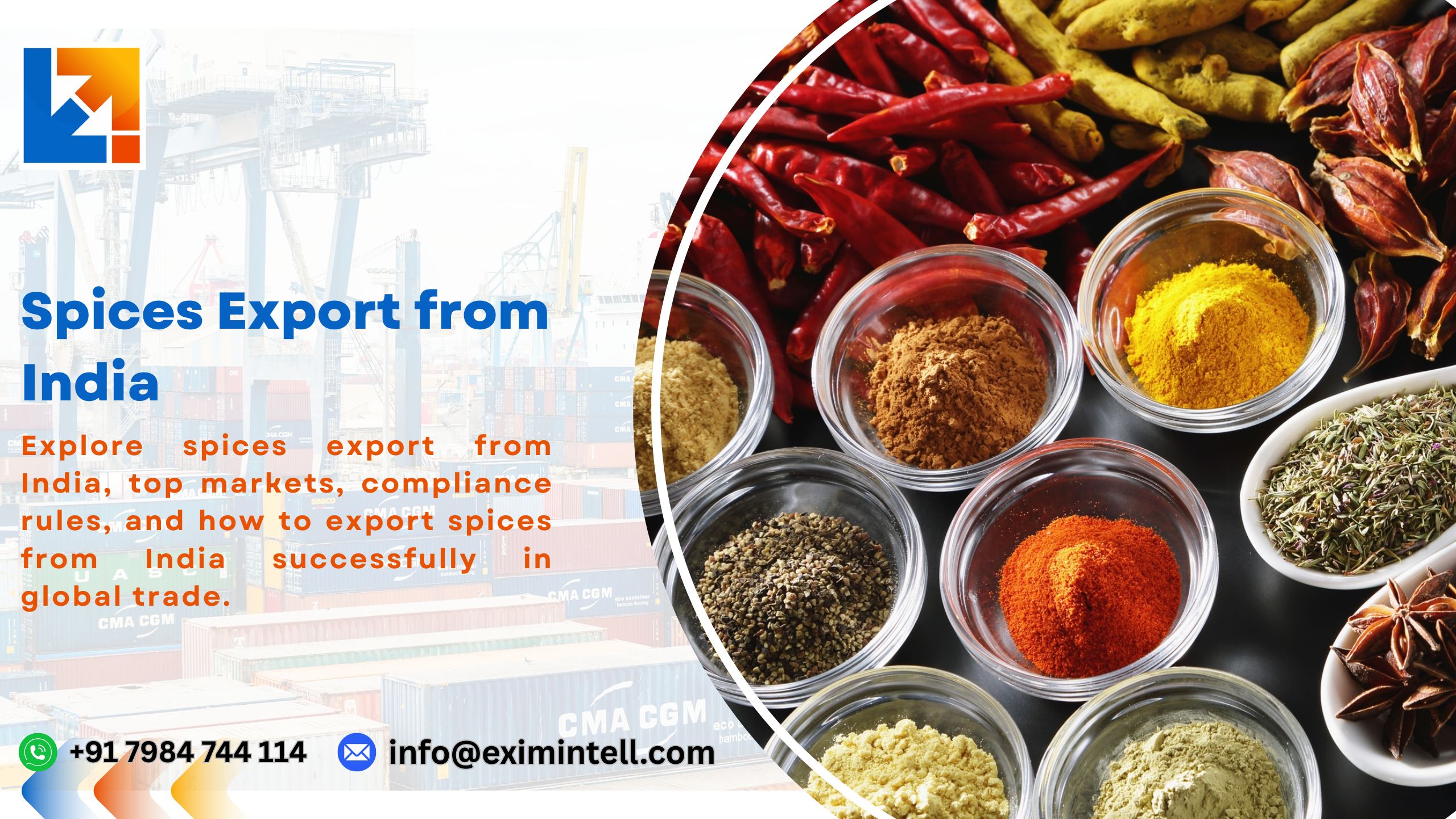
India is known as the land of spices as it has been the largest producer of spices for the longest time. Today, spices export from India to over 180 countries, making it one of the most important players in the spice trade. India is known for the quality of its spices as it offers turmeric, cumin, cardamom, and chili, among others. These spices are known for their strong aroma, absolute purity, and strong flavor. Due to the rapid growth of spice exports from India, it is evident that India is the most dominant player in the spice industry. India is the most common name that comes to the mind of global buyers when asked about the largest producer of spices.

India’s Strong Production Advantage

With over 70 spice varieties produced, India is the most diversely populated spice-producing country in the world. The expanding spices export from India is the result of improved traditional farming methods, favorable climatic conditions and soils. Over the years, the Indian spices export industry has modernized its systems of processing, quality control laboratories, and packaging to meet the needs of international standards.

Exporters wanting global reach are studying how to export spices from India professionally for the first time. A long-term relationship with buyers requires a professional spices exporter to manage grading, moisture, and global food safety.

Rising Global Demand for Indian Spices

The increasing demand for natural and organic food ingredients has strengthened spice exports from India across multiple continents. This is primarily due to Indian spices being considered a natural and organic food ingredient, which is now in high demand throughout the world. Indian spices are being used in processed food, ready-to-eat meals, pharmaceuticals, and health supplements. The boosts in Indian spices exports are due to quality, price, and reliability.

Before exporters learn how to export spices from India, they must understand the laws and legal documentation involved in order to be in compliance with laws. Once a professional spices exporter gains control over the export permit, quality certifications, and the tracking of shipments, he will complete all of the steps necessary for the shipment to export without any other legal issues.

By offering professional services, Import Export Services are able to assist in obtaining the necessary documentation, export permits, and trade control for the exporter, thereby improving the streamlined end-to-end export process.

Compliance and International Standards

The immense growth of spices export from India is influenced by the compliance to international standards and regulations that is practiced by the exporters. These exporters comply with the requirements for hygiene, packaging and labeling as directed by the importing country. An example will be the United States where exporters have to comply with the requirements of the Food and Drug Administration that is concerned with the safety of food and protection of consumers.

The exporters of spices from India have to carry out laboratory tests and obtain the results of the tests, obtain a phytosanitary certificate, carry out fumigation, and comply with packing regulations. These regulations strengthen the credibility of the spice exports from India.

In anticipation for the exporters of India to comply with the regulations, These exporters can rely on the Exim Consultancy Services to assist them in planning for the export and to provide them with the guidance on how to comply with the regulations.

Key Spices Driving Export Growth

The following have been identified to be the top contributors to spices export from India;

  • Turmeric
  • Black Pepper
  • Cumin Seeds
  • Chili Powder
  • Coriander
  • Cardamom

These spices are exported in whole, powdered, and processed forms. As global markets continue to question which country is the largest producer of spices, India’s consistent production volume and export diversity reinforce its leadership. The steady rise of indian spices export proves the country’s ability to meet bulk international demand without compromising quality.

How to Export Spices from India Successfully

How to successfully export spices from India is what most entrepreneurs ask when starting an export business. Steps to be taken include:

  1. Import Export Code (IEC)
  2. registering with the concerned authorities and export councils
  3. sourcing from spices suppliers
  4. quality checking
  5. finding international buyers and contract signing

Successful spices exporters also put great emphasis on market studies, competitive pricing, and good logistics. With the increase of consumption in the market, spices export from india is highly profitable. This is a good business opportunity for both novice and experienced exporters.

Economic Contribution and Future Outlook

Spices export business growth contributes significantly to our country’s agricultural economy. With the growth of the Indian spices export market, millions of farmers, traders, processors, and logistics providers benefit as well. The improving and innovative traceability systems, digital platforms to export, and packaging systems greatly enhance India’s presence in the exports.

As health-conscious consumers worldwide prefer natural flavoring agents, the demand for Indian spices is expected to rise steadily. This consistent upward trend confirms India’s leadership when discussing which country is the largest producer of spices.

Innovation in organic certification and value-added blend spices is also helping to shape the future of spices export from India. Value-added blended spice exporters who learn how to export spices from India in a compliant and cost-effective way will continue to gain a competitive edge.

Conclusion

The strong production capacity, legal compliance, and varied destination points for exports all support the continued dominance of India’s exports of spices in the international marketplace. India’s spice exports are on an uninterrupted upward curve, illustrating the growing dependence of the world on India’s agricultural expertise.

Learning how to export spices from India and working with trade specialists to guide them will help businesses to capitalize on the opportunities that exist in the international marketplace for spice exports from India. The spices export from India will continue to drive the world’s food economy and trade.

Continue Reading

Have you ever thought about venturing into the world of international trade? Are you looking for a lucrative business opportunity that combines sustainability and profitability? Well, look no further!

India, the land of vibrant textiles and diverse culture, presents an exceptional avenue for aspiring entrepreneurs. In this blog post, we delve into the intriguing realm of cotton export in India – a venture that promises immense potential and abundant opportunities. Join us as we explore why starting a cotton export business in this subcontinent makes complete sense.

Introduction: The Benefits of Starting a Cotton Export Business in India

Cotton is one of the most important crops in India and is grown extensively throughout the country. Cotton exports from India have been growing steadily over the past few years and currently stand at around $5 billion. The Indian cotton industry has several advantages that make it an attractive proposition for foreign investors.

First of all, India has a large area under cotton cultivation and is thus able to meet the global demand for the commodity. Secondly, Indian cotton is considered to be of high quality and is in great demand internationally. Thirdly, the cost of production of cotton in India is relatively low when compared to other major producing countries. This makes Indian cotton exports very competitive in the international market.

Apart from these factors, there are various other reasons why starting a cotton export business in India makes sense. These include the fact that there is a growing domestic market for textile products, the existence of a large number of skilled workers in the industry, and preferential trade agreements with several countries. All these factors make starting a cotton export business in India a very lucrative proposition.

Overview of the Indian Cotton Industry

The Indian cotton industry is one of the largest in the world, with production totaling more than 5 million metric tons in 2017/18. The country is also the second-largest exporter of cotton, behind only Brazil. In recent years, India has become an increasingly attractive destination for foreign investors looking to tap into the global cotton market.

There are several reasons why starting a cotton export business in India makes sense. First, the country has a large and growing production base. Second, government policies are supportive of the export sector. Third, there is a strong demand for Indian cotton both domestically and internationally.

Due to its large production base, India can offer a wide range of grades and qualities of cotton. This makes it an appealing destination for buyers looking for specific types of fiber. Additionally, the Indian government provides several incentives and benefits to companies engaged in exports, making it an attractive place to do business.

There is a strong demand for Indian cotton globally. This demand is driven by several factors, including the quality of Indian cotton and the country’s reputation as a reliable supplier. In addition, India’s proximity to major markets like China and Bangladesh gives it a strategic location advantage when selling into those markets.

Challenges Faced by Exporters in Cotton Export Business

The cotton export business in India has been facing several challenges in recent years. These include:

1. Difficulty in sourcing raw materials: The Indian cotton industry is heavily reliant on imported raw materials, as the country does not have enough land to cultivate its own. This dependence makes the industry vulnerable to changes in global prices and supply shortages.

2. Fluctuations in demand: The demand for cotton exports fluctuates greatly depending on international market conditions. This makes it difficult for exporters to predict their sales and plan their production accordingly.

3. Lack of infrastructure: The lack of proper infrastructure is a major challenge faced by the cotton export business in India. There are not enough warehouses, ports, and other facilities to cater to the needs of the industry. This often leads to delays and disruptions in shipments.

4. Competition from other countries: India faces stiff competition from other major cotton-producing countries such as China and Brazil. These countries have an advantage over India in terms of cost, quality, and logistics.

5. Stringent quality regulations: The textile industry in India is subject to stringent quality regulations set by the government. This makes it difficult for exporters to meet all the required standards and get their products approved for export.

Steps to Start a Cotton Export Business in India

Cotton is one of the most important crops in India, and the country is one of the largest producers and exporters of the commodity in the world. If you’re looking to start a cotton export business from India, there are a few things you need to do.

1. Research the international market for cotton: Know where demand is coming from and what prices are like.

2. Get in touch with exporting firms in India: You’ll need to work with an exporting company that can get your product to market.

3. Apply for an export license: To export cotton from India, you’ll need to apply for an export license from the Indian government’s Export Inspection Council.

4. Find buyers for your product: Once you have your product ready, you’ll need to find buyers who are interested in purchasing it. This can be done through trade shows, online directories, or by working with a broker or agent.

Documentation Required for Indian Cotton Exports

To export cotton from India, producers must obtain a letter of credit from an Indian bank and present it to the buyer’s bank. The letter of credit must be countersigned by a recognized foreign bank. Producers must also obtain an export license from the Indian Department of Commerce. The license is valid for one year and allows producers to export a specified quantity of cotton.

Cotton Export

Regulations and Rules for Starting an Indian Cotton Export Business

Setting up a cotton export business in India has its own unique set of regulations and rules that must be followed. Here is a brief overview of what you need to know:

1) Firstly, all businesses registered under the Companies Act are required to obtain an Export-Import Code (EIC) from the Directorate General of Foreign Trade (DGFT). The EIC is necessary for availing various benefits and privileges such as duty-free imports, concessional rate of customs duty, etc.

2) You will also need to obtain a Registration-Cum-Membership Certificate (RCMC) from the relevant export promotion council or commodity board. This will entitle you to several benefits such as lower interest rates on pre and post-shipment finance, participation in global trade fairs, etc.

3) To start exporting cotton, you will need to register with the Cotton Corporation of India (CCI). The CCI issues an Export Licence which is required for shipping cotton out of India.

4) All exporters are required to furnish an undertaking called ‘Advance License’ issued by the DGFT before starting commercial export shipments. This ensures that all exports are made against firm orders and contracts only. Undertakings can be given on behalf of companies or legally recognized partnerships. However, proprietorships are not allowed to give undertakings.

5) Shipping bills or Bills of Lading are required for exports by sea and Airway Bill is required for exports by air.

6) Shipping documents, a copy of the export license and RCMC must be made available to customs officials for clearance procedures.

7) You may also need to obtain a Certificate of Origin from the relevant authority to avail special benefits while exporting under various international trading arrangements.

8) Finally, you will need to open an E-payment account in any nationalized bank. This account will be required for submitting online applications and for making payments to government bodies and port authorities.

Tips to Ensure Success with Your Indian Export Business

As the world’s second-largest producer of cotton, India is an obvious choice for anyone looking to start a cotton export business. But there are a few things you should keep in mind to ensure success.

First, it’s important to understand the Indian market. What types of products are in demand? What are the buyer preferences? How does the competition operate? Conducting market research will give you a better understanding of these factors and help you make better decisions about your business.

Second, build strong relationships with your suppliers. In India, cotton production is often done by small farmers, so you must establish good relationships with them. This way you can be sure to get a consistent supply of quality cotton.

Third, choose the right logistics partner. When shipping cotton from India, you need to find a reliable and experienced logistics partner who can handle all the details of transportation and customs clearance. Otherwise, your shipments could be delayed or even lost.

Fourth, be patient. Rome wasn’t built in a day and neither is a successful export business. It takes time to develop relationships, find suppliers, build up inventory, and get everything else in order. Don’t expect instant results; focus on building a solid foundation for long-term success.

Conclusion

In conclusion, starting a Cotton Export Business in India makes plenty of sense. Cotton is a highly sought-after commodity globally and India has the opportunity to capitalize on this with its natural abundance of raw materials.

By establishing supply chains and infrastructure, Indian businesses can leverage their access to global markets while providing employment opportunities for local communities. Furthermore, with the positive macroeconomic factors at play in India currently and increasing free trade agreements, now may just be the perfect time to launch an export business based on cotton products from India!

Continue Reading